Moda oda radosti is an art, fashion and book blog whose aim is to celebrate all things beautiful. Focused on sustainable fashion, art and travel, this blog aims to find joy in everyday things.
Fashion Illustration, Blidinje Nature Park in Herzegovina
Get link
Facebook
X
Pinterest
Email
Other Apps
Hello dear readers and fellow bloggers! I'm taking to one phenomenally special place in Herzegovina. That special place is a combination of two mountain ranges that encompass a large plain and a mountain lake. Does that ring a bell? For regular readers of my blog, it might! With fourteen peaks located at above two thousand meters (or 6561 ft), Nature Park Blidinje is a heaven for mountains lovers. There are also Unesco protected sights here, hiking and cyclic tracks, ski resorts and restaurants. So, whether you're a foodie, sport, history or nature lover, this place has got you covered. Blidinje has an official online site, and here is a link: https://visit-blidinje.com/en/home/ for those who want to know more.
One of the most exceptionally gorgeous places in Bosnia and Herzegovina has a lot to offer. For lovers of nature and high altitudes, this is the place to be. It is also probably my favourite Nature Park in Bosnia and Herzegovina. Eloquent as I can be, I sometimes struggle to do justice to the beauty of this place. I cannot say that words fail me (as a teacher I do talk and write for a living), but I might need a moment to collect the right words. Painting such a stunning place is no easy feat, either. Still, once again, I decided to give it a try.
I did a quick illustration using one of my photographs as a reference. It is both a fashion illustration and location illustration. Sometimes an outfit and location is intricately connected. This illustration was my effort of capturing the key moment of our visit. I feel like every time I visit Blidinje there is a pivotal moment of some sorts. Of course just existing and being in such a gorgeous place, surrounded by nature relaxes both the body and spirit, but in Blidinje there is always a moment that goes a bit beyond that. Beyond the usual relaxation one expects in a nature park. A moment when I feel one with the nature. If you browse my old posts about Blidinje, you'll see what I'm talking about. I never visited Nature Park Blidinje without at least one moment of experiencing perfect tranquility. It must be the magic of this place.
As you can see, I will also be posting my illustration along side photography reference. A few words about the photograph, and then we'll move to the illustration. The photograph was taken by my husband during our trip. As we entered the Nature Park we decided to take a few photographs, so we found a suitable place to park the car. We took quite a few photographs before moving on. I like this spot because it offers a fabulous panorama of the mountains and the lake Blidinje. I'll show you more photographs from this spot soon enough, but let's talk about the illustration first.
Original sketch vs finished illustration
The medium for this illustration is watercolour pencils on paper. The same materials I used in my last art post. The sketchbook paper is really not suitable for watercolour pencils, but sometimes you have to make do with what you have. At the moment, what I have is this no name sketchbook. Next time I must remember to get some mixed media paper. Anyhow, there is not much to say here. I sketched the person and the outfit first, that is myself.
What I liked about this photograph was exactly what I tried to convey with my fashion illustration. I liked how this flowy maxi dress got caught up in the wind. After I sketched the basic outlines, I also sketched the background. After that, I went in and added more details to the dress, the hat and the rest.
work in progress (drawing)
I might come back to the illustration or do another one with similar scenery and pose. This location is certainly very inspiring! Bosnia and Herzegovina is not a country I was born in, but it is a country that I married into and I love it very much. I often stress on my blog that it is hidden gem in some ways. Many are not aware of the natural beauties of Bosnia and Herzegovina. If you are interested in learning more about it, here is :
There are four national parks and three nature parks in Bosnia and Herzegovina. At least there were, the last time I checked. I checked again today, and it is still the same number, so seven protected areas that fall under National Park and Nature Park label. There are many beautiful parks in this country, but not all of them have the status of a Nature Park. Speaking of which, both National Park and Nature Park are terms used specifically for protected areas of nature. Both have to met certain standards to be awarded this title and are typically regulated by conservation laws. The three Nature Parks in Bosnia and Herzegovina are: Hutovo Blato (founded in 1995), Blidnje (founded in 1995) and Bardač ( also founded in 1995). The four National parks are Sutjeska (founded in 1965), Kozara (1967), Una (2008) and Drina National Park (founded in 2017).
How do you use watercolour pencils? Well, usually you just draw with them and add water later. You can experiment, though? Dip your brush in water and apply to the tips of the pencils, making them portable watercolours. You can make a little palette by just swatching the watercolour pencils. The way watercolour pencils work is exactly like coloured pencils. You can use them like any regular coloured pencils. Draw with them, sharpen them and etc. The difference is that once you apply the water, they turn into watercolour. Obviously, this leaves you with a lot of options. There are many ways to use watercolour pencils. You can even dip them directly in water and try using them like that. It's something I haven't personally tried. However, I did try using them in a number of different ways. For example, I would apply the pencil harder in some parts of the drawing, and then there would be 'extra' colour to use, so I would dip my brush in that part and use it as a watercolour. I also watched some tutorials recently about using watercolour pencils. I realized that I used some of these methods myself, I just did not realize that I did. For example, drawing little swatches you can use as mini watercolour palettes later and so on. I will write more about it all some other times. For now, let me just share some general tips.
3 Tips for working with watercolour pencils:
1) The more you press the watecolour pencils, the more saturated the colour will be. So, for pastels shades press the watercolour pencils lightly while you're drawing, and for more colour press harder while you're drawing.
2) Add water slowly. Don't pour too much right away as this will make it harder for you to control it. You can also add more water later on, but remember that you cannot delude the watercolour pencils once they are try. You can do it while they are wet by adding more water, but once they are dry, that's it. They will be fixed on paper. However, this can actually come in hand if you want to do some glazing.
3) Remember that you can work in layers and come back to i once it is dry. You can do more drawing when the watercolours are dry. One of the great things about this medium is that it can be used both as a mixed media and as either of the mediums it holds in its name (that is 'watercolour' and 'pencil').
This illustration is obviously drawn with a reference. I wasn't going for a complete realism. In reality, it is a quick sketch, but I feel it captures the moment, at least somewhat. I think using a reference and doing quick sketches is one of the best way to improve your skills. When you're working quickly, it can teach you so much, especially since it can basically be an assessment of your skill level. Similarly, working slowly can teach you to pay more attention and help you focus on the details. I already wrote about all of this. There are benefits to both drawing quickly and slowly...and at normal speed. Likewise, there are benefits both to drawing with and without a reference. Art is not one of those things whether it is this or that to improve your skill. Like with language, there are different areas you can and should work on. Doing the more of the same thing will sometimes stagnate your process. So, it is not a question of is reference important? Of course, it is important and in many ways. It depends on what do you want to draw or illustrate, why and so on. There are a million ifs and why. Illustrating, drawing and painting is visual math. It's doing a math task thousand of times, solving visual math problems. The question is not should I drew with a reference or from imagination? That will depend on what you're actually trying to do. Until you got the skills, what you need is practice. Lots of it. Draw slow and draw quick. Draw with and without a reference. Take a reference and follow it closely. Then take another reference and don't follow it closely. Then draw from imagination. Do everything and do a lot of it. My answer would be that you should do both. When I wrote about ten ways to improve your fashion illustration skills, both drawing with and without reference made my list of tips. I said that drawing with reference is important because it not only teaches you how to draw what you see but it also teaches you to look and pay attention to details. Similarly, drawing without a reference is important because it teaches you to see with your mind's eye. Both is important to challenge yourself. Sometimes you can combine both.
More posts with illustrations made with watercolour pencils
If you browse my blog, you'll find hundreds and hundreds of fashion illustrations. Some of them are great. A lot of these illustrations are objectively not that great. However, it does not matter. If you make one good drawing, it does not matter if you made a million bad ones. The rest simply do not count. In fact, you have to make bad art before you do good art. Art is not like life, where you pay if you make a mistake. Even in life, we do not pay for every mistake. In life like in art, we learn from our mistakes. However, in life you can sometimes genuinely ruin everything with one bad choice. Like those people who get drunk and kill an innocent person. In life you cannot always start fresh again, you need to pay for your mistakes. In art you can always start again. Every blank page is a new opportunity and there are no punishments for messing it up, apart from those you make yourself pay. No, you pay nothing if you make a mistake in art. You just correct it and/or make more art. You make a bad drawing. Who cares? You make an average drawing. Who cares? Bad and average art is better than no art. If you don't want to share art you consider bad, that's alright, but you have to make bad art, or art that does not meet your own personal standards. It is just the way it is. As your skills improve, the definition of what you personally as an artist find satisfactory will change. Even if you're skilled, sometimes you're bound to make something that you won't be happy with.
My advice is to be careful with what you call bad art, even if you don't show it to anyone. In other words, be realistic. If you've done some illustration in ten minutes, don't expect it to look like something you'd do in ten days. If you haven't done art for ten years, don't expect it to look like you've been painting every day for the last ten years. This applies to everything, not just life. Be realistic with your progress and set realistic goals. Of course, one should not avoid constructive criticism. There is nothing wrong with applying critical thinking when it comes to your art. Just don't over do it. Keep it constructive. Keep your art, even the one you consider bad. You might use it some day. Who knows with where we're heading with the widespread AI art theft, will there be any original art left?
Finished fashion and location illustration
If there is anything I have learnt is that art is hard, but not exactly as complicated as it is portrayed. Yes, it can be complicated, depending on how ambitious you are, but generally speaking art skills are skills. They are not that different from other skills. You either develop them or you don't. If you develop them and don't use them, you sometimes loose them and need to start fresh. Sometimes it is really not that deep. I think that artists often don't have a confidence problem. Everyone tells them they need to be confident. However, what does it even mean to be confident? I think artists have a skill problem. I know that I have. Whatever you're insecure about as an artist, it's probably a skill problem. Whatever it is you're struggling with as an artist, it is most likely a skill and not a confidence problem. I really think it comes down to this.
I'm speaking from my own experience, of course. My blog is a testament to both how good and how bad my art gets. I still make art I'm not happy with. In fact, I often make art I'm not completely satisfied with. Not completely satisfied is fantastic. It means there is place for improvement. If I didn't push myself, I would have never made any progress. Honestly, I wished I pushed myself a lot more a lot earlier, but also kind of don't. Sometimes in life things come at their own pace and that's alright. It is not a catastrophe if you take time with something, you know.
Today everything is a race. Learn to paint in five days. Become fluent in five ways. Race. Race. Race. What is wrong in taking time to do something? Aren't we all learners? Are we not all learning things every day? So, why this competition to learn a language in as little time as possible? To learn anything in as little time as possible? As if we are failing in life if we don't do everything in as little time as possible?
If we're not mastering a skill in a month or so, we might feel like a failure. The modern society teaches us we must always save time. Why do we must save time on everything? Use AI to write personal messages? Automate everything? What do we do with all that time we saved? Doomscroll? Probably! Have more time to buy things we don't need to fill the emptiness we created by purchasing memories instead of making them? To buy things to buy a feeling of acceptance we should have gotten from growing actually meaningful social relationships and friendship?
I mean sometimes you really have to think about it to realize how utterly ridiculous it all is. Relax in the minimal amount of time possible. Travel in the minimal time as possible. Learn this and that, the fastest you can ...or what? What is wrong with taking our time? Aren't the things that are worth doing the ones that take the most time? Isn't being a sister something you do all your life? A partner? A friend? What is this obsession in mastering something in as little time as possible. However, I digress.
What I want to say is that we don't need to overthink it. There is a lot of gatekeeping in art. All that talk about authenticity and confidence just keeps some artists down. It makes them feel like they lack something that others have. I think it's the same with life actually. People are constantly told they just need to believe in themselves, like that will magically solve everything. I think it's better to concentrate at a job in hand. Has this drawing failed? If yes, why? In a sense, no drawing or illustration fails because you can always learn something from it.
So, when I struggle with something or if I fail at a painting or illustration, I don't do a deep soul search. I assume it is because my skills are not up to the task. Nothing personal. Just a skill issue. Skill issues can be helped and solved. People use all kind of confidence talk that sound great, but ultimately just confuses people. It is better to say- Hm, my proportions are a bit off, I might want to work on that.
Isn't it better to think of it as a skill issue? And not assume I have failed because I have forgotten to be confident or true to myself. Success is not something you purchase. You don't fail at art because you disobeyed some Internet guru who told me to trust in yourself. You fail because objectively you did not move your hand in the right way. It is not because I did not buy some self-help or life coach course. If I fail at a painting or illustration, I start again and I work on my art skills. Sometimes I just shrug my shoulders and forget about it. None of that confidence nonsense. None of that- if only I believed in myself. No, thank you. I'll pass on the motivational speeches.
Therefore, artists, it is not you. It is not your confidence. It is your skills. Art is hard. You have to constantly work on your skills. I know it does not sound as exciting as working on your authentic self, building your confidence or whatever sales pitch the motivational gurus are using these days. However, the difference is that working on your skill actually works. It takes the pressure of trying to figure out what this mythical 'confidence' is that everyone seems to be wanting and most of us lacking. I realized that I don't need confidence. I'm doing just fine without it, thank you. Minding my business and working on my art skills.
All that talk about artistic confidence. There is a place for it. However, not as as a motivation sales pitch. Confidence in your art comes from experience, from developing your art skills. There is no magical spice called 'confidence' or 'authenticity' that will turn you into a great artist. If you want someone to help you advance your art, hire an art teacher, and someone who gives you constructive feedback, instead of feeding you with those lazy buzz words.
Whenever I see people telling artists it's a confidence problem, I want to roll my eyes. Painting is partly visual math. Often when you fail at painting, you basically fail at visual math (geometry, proportions etc.). Hand to eye coordination, colour theory, planes and what not...it is all about skills and knowledge. Nothing of it has anything to do with confidence. Sometimes it is not that deep.
I didn't plan to write so much about art today. However, I was somewhat triggered by seeing one 'it's not an art problem, it's a confidence problem' post on YouTube and a lot of 'confidence' post on Linkedin. Saying someone that they need to be confident is such an generic thing to say. Imagine if I as a teacher just told my students - Just believe in yourself! Be confident! Is there a more useless feedback? No, I tell them 'do this and that' to get 'this and this'. I give them realistic feedback based on their results. I tell them what kind of work they need to do for what kind of grade. I praise them when it is appropriate and I don't when it's not. You know, I use my common sense. That's what a normal teacher does. They give constructive feedback, not gaslight their students into searching mystical 'confidence' and other nonsense. We live in a time when everyone is a motivational speaker and guru, and frankly it is getting exhausting listening to same generic stuff all the time. The AI content explosion is making the generic advice madness ten times worse. It is starting to be increasingly difficult to find texts that do not sound generic and artificial. Either a lot more people are using AI to write their texts, or AI is influence the way people think. Or both. I don't know what is worse. Do you?
Did I see anything new in Blidinje this time? Actually, I did- the mountain Church of Our Lady of the Snows. A lot of people told me they either visited it or wanted to visit it. I always wanted to visit it, but somehow we were always short on time. The Church of Our Lady of the Snows is located in the Blidinje Nature Park near Lake Blidinje. It is adorned with a tall bell tower. It is built in a typical mountain architecture style. It was build in 1995, in an honour of an extraordinary event when it snowed in August. The locals connected it to a similar event that happened in Rome, Italy. I'll tell you more about it below. The church was not open when we visited so we just admired it from the outside. We actually had coffee and cakes in the restaurant right next to it.
Cited from Hajdučke Vrleti site: "Barzonja, or, according to some sources, Bardonja is one of the oldest villages in the area of Polja. There is a Church dedicated to Our Lady of the Snow there, erected in 1995 by Friar Petar Krasić as a symbolic link between the Catholic people of this region, and the snow, which is a kind of symbol of the Mountain in one of the legends."
Church of our Lady of the Snows
I really like the location they picked to build this church. It feels perfectly positioned against the backdrop of the mountains. However, after checking I realized that the location was not accidental. It was chosen because here it snowed in August many years ago. There is also a legend connect to this church.
If you're into history, there are some interesting legends to be found in connection with this church. There is a Catholic legend connected to the concept of the Our Lady of the Snow. It dates back to the fourth century when Virgin Mary appeared to pope in Rome in August and asked him to build a church on location marked by snow. The snow miraculously fell and the church was build. There are many churches named Our Lady of The Snows across the worldin honour of that event. On exactly the same day in August, only centuries later, the snow fell in Blidinje during a mass in the open. On this site, this church was built on initiative of late friar Peter, who took great efforts to protect Blidinje Nature Park during his life.
You can find it on official site of Hajdučke Vrleti, a hotel in Blidinje that hosts some cultural events. According to that site: " On exactly the same date when snow fell on the Roman hill of Esquiline hundreds of years earlier, a mass was celebrated at Barzonja, at Polja, in the heart of the Mountain. Several shepherds, women, children, and elderly, gathered around noon on a hillock above the plain to celebrate the Holy Mass that Sunday. At the beginning, this mass was no different than any other, just as the hot summer day was no different than any other day during that month. The mass proceeded as usual until the moment when friar raised the chapel and communion wafer to be transformed into flesh and blood, when a strong wind rose and heavy clouds covered the clear sunny sky. By the time the friar had completed the sacramental prayer and lowered the body and blood of Christ back on the altar, people had begun to stir, cloak themselves with shepherd’s raincoats and anxiously look at the sky and each other. The wind blew harder and harder, the sun disappeared, and a chill crept into the people’s bone. Marvel, fear and cold mixed. They all knew that the Mountain was treacherous and that heat and cold, and sun and rain, and wind and cold could all appear during day, but never this suddenly. The friar also realised that something was wrong and that the mass would not be able to continue, and commanded the people to retreat to a nearby barn to hide from the approaching storm. The people obeyed and squeezed into the barn with the friar and the sheep. When everyone settled, the friar said the mass would continue there. The shepherds separated the sheep from the people and the interrupted mass continued. No one paid much attention to the weather outside any longer, only the strong wind howling through the thatched roofs and the creaking of old beams under the gusts of the bora wind occasionally testified to the storm raging outside. When the mass was over, the friar blessed the congregation and went to the door to see what was happening outside. The shepherds opened the door for him, and he watched in wonder and disbelief the wondrous scene outside. Everything was white, the snow blanketed all the Polja and the whole Mountain. He stepped outside, followed by the people crossing themselves and invoking saints. In the middle of summer, on the fifth day of August, it snowed from the clear skies and covered the Mountain. In commemoration of this event, in the honour of Our Lady and the mountain snow, the first mass was held on 5thAugust 1995 in the new Church of Our Lady of the Snow, at Barzonja, in the place of the barn that provided shelter from the storm for the people and the friar. It may be a legend, but one thing can be verified and believed, which is snow in August." Site cited: https://www.vrleti.com/en/legend-of-our-lady-of-the-snow/
If you check the video YouTube short below, you'll also be able to see the church.
Previously, we would always visit the Church of Saint Elias because our friend friar Peter, the person who is to be thank for the preservation of Blidinje Nature Park lived there. Unfortunately, he passed away not to long ago. I did not actually know that he took the initiative to build this church as well. Every time I look information online, I find something else friar Petar did for Blidinje Nature Park. He managed to accomplish so much in his life, despite having a serious heart condition. All in all, I definitely recommend visiting both churches and Blidinje in general.
If you want to know more about Blidinje, you are welcome to visit my old posts. I already shared some of my Blidinje links above, but I'll do another short recap below so give you a general idea of what you can see and do.
Whether you're a nature, history or sport lover, this Nature Park has got you covered. The mountain air will do wonders for your lungs. The nature here is obviously amazing, and there is much to see and do. This park offers many activities depending on the season (from skiing, cycling, adventure sports, cannoning, to hiking). Good quality accommodation ranging from camps to hotels, so finding a place to stay is not a problem. There are many nice hotels, motels, ski reports, and so on to stay in. You can also count on a memorable culinary experience, as there are quite a few restaurants serving quality cuisine. One fun fact is that you can have your own 'Hajduk Republic' passport made in Hajdučke Vrleti motel, (this motel Hajdučke Vrleti also organizes cultural events that are fun to attend). Blidinje lake is worth a visit on its own, and you can also try cannoning. A friend of us that has a house here, and that we visited on this very occasion, often goes cannoning on lake Blidinje. In addition, there is a necropolis in the park that you can visit for free. Besides the church of Saint Elis you can also visit the church of Our Lady of Snows.
LAKE BLIDINJE
I already took you to mountain lake Blidinje in my SIGHTS TO SEE, PLACES TO VISIT: BLIDINJE LAKE feature as well as in this post and this one. Lake Blidinje (Blidinjsko jezero) is absolutely beautiful. Some say that the park itself was named for it. Lake Blidinje is actually the largest mountain lake in Bosnia and Herzegovina, located at an elevation of 1.885 meters (3.888 feet). This lake isn't very deep, its maximal dept is about 3 meters and its average dept is only 0.5 m. Its width and length are a bit over 2 km, but these two can also vary depending on weather conditions.
THE MOUNTAIN CHURCH OF SAINT ELIAS - AN OASIS IN GREEN
Located at 1204 meters of altitude and surrounded by breath-taking nature, this mountain church is a beauty. I love mountain churches, I found them to be so romantic. This one especially so! Church of Saint Elias the Prophet is like an oasis in a deep forest. If you want to see and read more, you can read about this mountain church of saint Elias in this old post of mine and you can also see more photographs here and here.
Cited from UNESCO: " The size and density of the area, with its unbroken karst biodiversity and unusually rich flora and fauna, is of major interest for further scientific study. The Dinarides themselves are an endemic centre of Europe. The central Dinarides area is among the richest in the 700 km long mountain range. The nature park includes 11 mediaeval necropolises with stecak tombstones. The majority of the tombstones are decorated with rosettes, crescent moons, crosses and various borders. There is a variety of figural scenes, most of them hunting, jousting or round-dance scenes. The designs indicate that this area has links not only with Herzegovina but also with western Bosnia. In addition, many of the decorations and other scenes make Blidinje a distinct entity."*
At the local cemetery and the statue devoted to Diva Grabovceva, a young Catholic girl from the 17th century who is considered a martyr by the locals. Diva was stabbed to death after she rejected the marriage proposal of Tahir-beg Kovcic. She is revered by the locals because she preferred death to abandoning her faith. I actually attended the first performance of the first opera devoted to Diva back in 2016.
The colourful striped scarf- vintage (second hand)
If you looked up the links above, you would have noticed that I often wear this scarf with this straw hat. Besides wearing it on its own, I also wear it as a regular hat or an accessory with my bags. Sometimes I even wear a scarf as a belt or a hair tie. There are so many ways to wear and style a scarf!
The white long maxi dress with a floral print and a high slit (old):
This white maxi dress is lovely, but it is more of a beach dress. It has a high slit, so I usually wear it just to the beach. However, I sometimes style it with pants to make it more appropriate for every day wear:
Hello Ivana, Fantastic pictures on these wonderful places. Great to see how you have made these wonderful paints with those special pencils. The results are TOP!!
I really enjoyed reading this post. I love how you connected the beauty of Blidinje with the process of creating art, because sometimes a place gives us much more than just a pretty background — it gives us a feeling that we want to preserve somehow. Your illustration really captures that atmosphere of a quiet, special moment.
I also found your thoughts about confidence in art very interesting. I agree that skills, practice and learning the basics are often overlooked when people talk about becoming better artists. At the same time, I wonder if confidence doesn’t sometimes come naturally as a result of improving those skills — maybe they are not two separate things, but something that grows together?
I really like your approach of not treating every “bad” artwork as a failure. It’s true that every drawing teaches us something, and sometimes the imperfect ones are the most valuable because they show us where we can grow. Thank you for sharing not only your art but also your honest thoughts about the creative process.
Hi, Andrzej. I agree confidence comes naturally as our skills get better. I also think we should not strive to be too confident. There should always be room for improvement.
This post makes me want to see Blidinje for myself. The lake, the churches, the legends, all sound incredible. Your art really captures the spirit of the place.
I very much enjoyed this visit to the National Blininje Nature park with you! Your sense of joy at being there is really captured in your illustration and I enjoyed the motion of it! It is a super place. "My advice is to be careful with what you call bad art, even if you don't show it to anyone. In other words, be realistic. If you've done some illustration in ten minutes, don't expect it to look like something you'd do in ten days. If you haven't done art for ten years, don't expect it to look like you've been painting every day for the last ten years. This applies to everything, not just life. "- I really like this quote- something my students should learn from- they seem to think they can achieve without effort. I also think about this with my poetry too. Sometimes, I'm proud of it and other times I cringe. How much time did I actually spend on it. Was it worth sharing even though I wasn't sure of it!?
I know how you feel. I think sharing it is always good, as long as we're comfortable with it, and sometimes it is good to push ourselves out of the comfort zone. Still, I also think it is important to remember to create art for ourselves first, and not to be too dependent on social media.
Blidinje looks like a pure dream of a place, especially with those massive mountain peaks and the quiet lake. Your watercolour illustration is gorgeous; you have captured the wind catching your dress perfectly. I love your take on art skills versus confidence, too, because you are spot on focusing on visual math and practice is how you actually get better, rather than just waiting for some magical confidence to appear. That legend about the snow falling in August to build the Church of Our Lady of the Snows is absolutely wild, but it makes visiting that mountain chapel feel even more special.
With summer being in full spring, I caught myself thinking about iconic summer outfits. Do you know what came to my mind? Costumes/outfits worn by Monica Bellucci when she played Malena Scordia in an iconic Italian movie set on Sicily. The costumes for that movie were designed by an acclaimed Italian costume designer Maurizio Millenotti and he outdone himself! Seeing that Malena is a historical movie, Maurizio choose quite timeless outfits and cuts that will ever go out of style. That fact makes Malena movie the perfect place to look for inspiration! Moreover, I feel that Monica Bellucci's personal style is quite similar to Malena's (i.e. to the style of the character she is playing). There is definitely a Mediterranean lady feel about Malena/Monica Bellucci. What says summer better than Mediterranean and Sicily? Today we'll analyze Malena's style and see what we can learn from her. There is much to learn! Having analyzed looks that Monica wore in iconic Malena ...
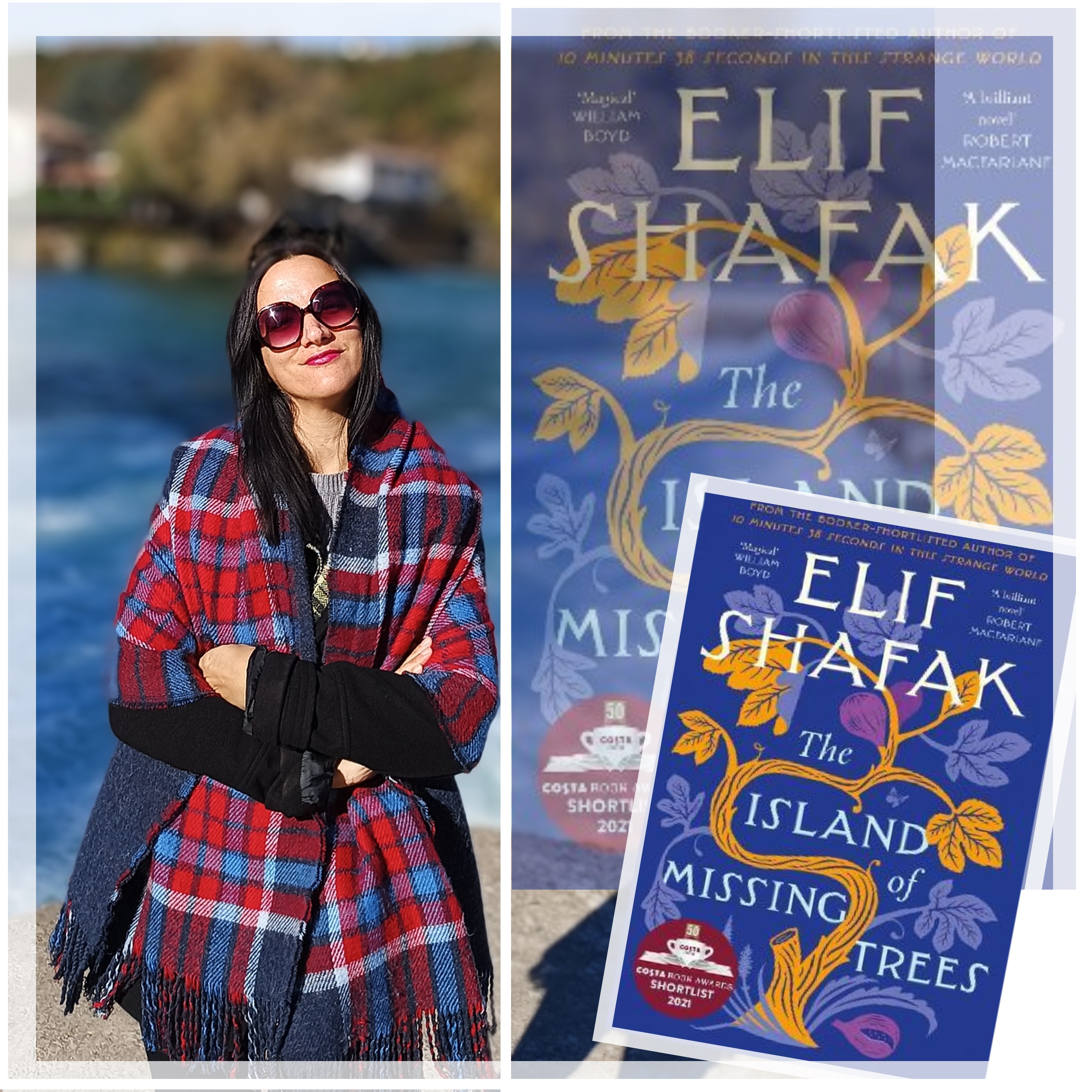
Today I shall review The Island of Missing Trees by Elif Shafak. I was actually gifted this book. What a wonderful present it proved to be! Published in 2021, this postmodern novel follows two story lines and uses framed narration. The Island of Missing Trees tells the life story of a Greek Turkish couple and their adolescent daughter. This novel examines and explores a number of topics such as identity, migration, immigrant life, war trauma, memory, love and family. It's an ambitious novel that examines serious topics with due respect and sensitivity . I read it months ago, but I remember it vividly. Honestly, I cried a lot while reading this novel. It really moved me greatly. In fact, that is probably why it took me this long to finish this book review. I needed to emotionally process the story. The Island of Missing Trees is set in London and Cyprus. The narration isn't chronological . The story jumps back and forth, following ...
Hello dear readers! Ever beautiful and elegant, Monica Bellucci remains a style inspiration. Today we'll be hacking Monica Bellucci's style secrets. This gorgeous lady can teach us a lot about style and beauty! Monica Bellucci is an Italian actress loved by many designers, including D&G duo and Dior. She is known for having a very feminine style of dressing. One could definitely call her a style icon. So, why not analyze her style? In this post, we will start with identifying the key items in Monica's closet and then we are going to examine them. Finally, we'll hack her style secrets. I already wrote a bit about her style when I analyzed Malena's (character played by Monica Bellucci) wardrobe . The reasons why I have decided to write about her again is because of her timelessly elegant and chic style. I happen to think Monica Bellucci has a very classical style of dressing that is quite ageless and universally flattering. In fact, you probably already have ...



Simply the best 🫶😀
ReplyDelete:)
DeleteLijepo sa Blidinja.
ReplyDeleteBlidinje je prekrasno:)
DeleteHello Ivana,
ReplyDeleteFantastic pictures on these wonderful places.
Great to see how you have made these wonderful paints with those special pencils.
The results are TOP!!
Many greetings,
Marco
Thanks, Marco! Greetings to you as well.
DeleteI really enjoyed reading this post. I love how you connected the beauty of Blidinje with the process of creating art, because sometimes a place gives us much more than just a pretty background — it gives us a feeling that we want to preserve somehow. Your illustration really captures that atmosphere of a quiet, special moment.
ReplyDeleteI also found your thoughts about confidence in art very interesting. I agree that skills, practice and learning the basics are often overlooked when people talk about becoming better artists. At the same time, I wonder if confidence doesn’t sometimes come naturally as a result of improving those skills — maybe they are not two separate things, but something that grows together?
I really like your approach of not treating every “bad” artwork as a failure. It’s true that every drawing teaches us something, and sometimes the imperfect ones are the most valuable because they show us where we can grow. Thank you for sharing not only your art but also your honest thoughts about the creative process.
Hi, Andrzej. I agree confidence comes naturally as our skills get better. I also think we should not strive to be too confident. There should always be room for improvement.
DeleteLindo vestido te quedaron geniales los dibujos. Te mando un beso.
ReplyDeleteGracias<3
DeleteGreetings from Turkiye
ReplyDeleteGreatings from BIH!
DeleteThis post makes me want to see Blidinje for myself.
ReplyDeleteThe lake, the churches, the legends, all sound incredible.
Your art really captures the spirit of the place.
Thank you Veronica! Blidinje is really as wonderful as it seems.
DeleteThe illustration is great. You can almost feel the movement in it.
ReplyDeleteThe landscape you're standing in is magnificent.
Thanks, Andrea.
DeleteSo beautiful!!!
ReplyDeleteThank you:)
DeleteI very much enjoyed this visit to the National Blininje Nature park with you! Your sense of joy at being there is really captured in your illustration and I enjoyed the motion of it! It is a super place.
ReplyDelete"My advice is to be careful with what you call bad art, even if you don't show it to anyone. In other words, be realistic. If you've done some illustration in ten minutes, don't expect it to look like something you'd do in ten days. If you haven't done art for ten years, don't expect it to look like you've been painting every day for the last ten years. This applies to everything, not just life. "-
I really like this quote- something my students should learn from- they seem to think they can achieve without effort. I also think about this with my poetry too. Sometimes, I'm proud of it and other times I cringe. How much time did I actually spend on it. Was it worth sharing even though I wasn't sure of it!?
I know how you feel. I think sharing it is always good, as long as we're comfortable with it, and sometimes it is good to push ourselves out of the comfort zone. Still, I also think it is important to remember to create art for ourselves first, and not to be too dependent on social media.
DeleteBlidinje looks like a pure dream of a place, especially with those massive mountain peaks and the quiet lake. Your watercolour illustration is gorgeous; you have captured the wind catching your dress perfectly. I love your take on art skills versus confidence, too, because you are spot on focusing on visual math and practice is how you actually get better, rather than just waiting for some magical confidence to appear. That legend about the snow falling in August to build the Church of Our Lady of the Snows is absolutely wild, but it makes visiting that mountain chapel feel even more special.
ReplyDeleteIt is a nice place.
DeleteBeautiful illustration.
ReplyDeleteGreat post.
www.paginasempreto.blogspot.com
Thanks Rafaela
DeleteYour photos and illustrations are always very beautiful; you are very talented! ✨
ReplyDeletehttps://www.heyimwiththeband.com.br/
Thank you, Valeria.
DeleteYou look beautiful in these photos and the place is really wonderful
ReplyDeleteThank you, Klaudia.
Delete