Hello dear readers and fellow bloggers! In this post, I'll share my review for The Epic of Gilgamesh (alternatively spelled Gilgamish). Considered the first ever narrative work of literature, this Mesopotamian epic dates back to circa 2100 to 1200 BC. However, the original but uncompleted version of this epic, the so called 'old Babylonian version', dates back to eighteen century BC. When it was first discovered in the 19th century, The Epic of Gilgamesh was labelled as belonging to the 'Greek epic genre'. Although, the older version of this work of literature predate the Greek epics considerably, it was understandably hard to define The Epic of Gilgamesh within existing literary traditions. Many histories of literature were written before this epic was ever discovered and literary traditions established. I always wondered what would have happened if it was discovered earlier? Would ancient Greek epics been viewed as post Babylonian or Mesopotamian epics, as successors to The Epic of Gilgamesh? Moreover, the discovery of this text was not just one time thing, it was actually a series of discoveries and the research about The Epic of Gilgamesh is still ongoing.
Different versions and fragments of this text have been found over the years, and on different tablets. The majority of these Gilgamesh historical tables, like many other artefacts, were taken by the British during the colonial times and you can find most of them in The British Museum if you fancy seeing them in person. The topic of Gilgamesh is a fascinating one, as new discoveries and studies are still regularly made. For example, some of these new studies suggest that Gilgamesh actually existed as a historical person. New versions of the epic are constantly being published, but the epic still remains incomplete as such. There is still no full version of this text, both its older and newer version, and all the tables so far found have lines and verses missing. I don't think necessarily takes away from the enjoyment of reading this epic, and can even serve as a source of inspiration, when we try to fill the gaps with our own ideas. In this post I'll focus more on literature aspect of The Epic of Gilgamesh than on the historical one, as I'm a teacher of literature and not history. However, the two subjects are often interwoven. Hence it seems necessarily that I share a bit of historical context with you.
Whether we (as regular readers) actually see the original tables in museums or online, we won't be able to read the Akkadian language (originally Sumerian)
The Epic of Gilgamesh is written in. So, what you will do if you decide to read this epic is rely on a translation. Fortunately, this epic is widely translated and available online on different perfectly legal sites such as
project Gutenberg, online libraries and so on. Universities, schools and museums will likely have not just the source text but also information about
The Epic of Gilgamesh on their sites. Did I mention this epic is the oldest narrative work known to mankind? So, there is much materials to pick from and read if you love ancient history. I shall not focus too much on the historical aspect, as there are some themes in this work that are truly eternal and that is exactly what I want to focus on. Still, it seems important to stress that when we talk about this epic, we're talking about something truly ancient. For the purpose of this book review, I'll use quotes from the source text (translation by Stephen Langdon) on project Gutenberg. * I will also cite Andrew George's
The Babylonian Gilgamesh and
the Yale Discovered Texts With the Old Babylonian version, translated by Morris Jastrow Junior and Albert T. Clay. My apologies if I get something wrong, there are so many translations and discoveries of this text, it is hard to be fully accurate if you are not an expert on the subject. Of course, I did a fair bit of reading before writing down this review, but I'm not an expert on neither old Mesopotamian nor old Babylonian literature. Besides this book review, I'll also share an illustration and outfit of mine today. I actually picked an outfit that matches the tone of the historical tables containing the fragments from
The Epic of Gilgamesh.
 |
| A collage with my outfit and photographs of the historical tables taken from the Internet |
Before we even start with the analysis of this epic, I'd like to share what made it stay with me and what made me pick it up again after almost twenty years. Let us get right into the literary merit of this epic. Why read The Epic of Gilgamesh, apart from the fact that it is a classic? What made it stay with me? What are some of its literary merits? Let us forget about the immense historical importance for a second and look at the text as such. What makes it a worthy reading choice? Who is the protagonist? What are the characters like? What is the narrative like? What is the story about?
Well, one thing I liked about this epic is that the narrative functions really well. The story is honestly interesting to read as such. You have a logical beginning, and a protagonist hero who goes on adventures. You have a story of friendship between two heroes, that evokes both ancient Indian and Greek myths. The Epic of Gilgamesh often feels often in sense of the Old Testament, you have the king that sins but repents a becomes virtuous, something like king David, two strong heroes that fight lions and wild beasts to save the people, so something like Goliath. There is also the flood episode in the Gilgamesh that is almost identical to the one in the Bible. The flood episode is the most obvious connection between the Hebrew and Mesopotamian literature, history or myth, but there are other similarities.
The culture of Gilgamesh is an ancient one, but it is not terribly different from other ancient cultures we have sources on and have read texts from. Its society is not terribly different from ancient Hebrew or Greek one. There is a focus on family life and marriage with monogamy as the official social structure. There are gods that often get into the
It is interesting how the feminine is presented as a powerful, even dangerous force. The women and the goddesses have a lot of power in this epic. The female gods have as much power as the men gods, and Gilgamesh's rejection of a goddess's love has tragic consequences. Of course, as with all literature there can be different interpretations and analysis of all characters, but the female characters have a lot of influence on the destiny of the principal characters, Gilgamesh and his best friend.
Speaking of gods and goddesses, you will notice they act a very active role, just like goddesses and gods in ancient Indian or ancient Greek texts. The gods often set things into motion, answer the prayers, help the protagonist or turn against him. So, if you have read ancient Indian or ancient Greek myths, you shall find The Epic of Gilgamesh familiar in this sense. It is easy to relate to Gilgamesh, even if he is only one third a man, he still suffers the fate of all men. Like the heroes of the ancient Indian or Greek epics, Gilgamesh is often at the mercy of destiny, higher forces, gods and all the human predicaments such as illness and death.
Moreover, while Gilgamesh is exceptional in many ways being two thirds a god, that one third is enough to make him mortal. So, the eternal question of human mortality is raised. There is also the question of grieving and loss. This epic talks about the brevity of human life, and the human need to create something of eternity, be it great deeds and quests, or just virtuous conduct. Gilgamesh has to confront his mortality, and deal with it. So, in a way this epic is about maturing and accepting that death is a natural end of a human body. Gilgamesh is not a child when the epic opens, he is already a king, but he is a tyrant king, not a good person at all. Gilgamesh has a lot of growing up to do as a person, even if he an adult, he is not adult in the sense that he has control of hinself. By the end of the epic, Gilgamesh is a completely different person.
What is great about this epic is that this transformation does not happen only through suffering hardships and going on the quests, the driving force behind it is actually friendship. Gilgamesh starts off as someone who thinks only about himself, as someone mighty but ultimately selfish and immature. As he goes on quests, risks his life for others, and finds a true friend, he changes. Gilgamesh starts to make choices for himself, and these choices define him. It is lot a linear path, he has his crisis, his moments of doubt, sorrow and desperation, but while he might step back, he always continues moving on his path of maturing. By the end of the epic, Gilgamesh is virtuous and kind. So, there is a definite didactic quality to this epic.
Perhaps what stayed the most with me is the way this epic emphasizes the importance of friendships. It shows how having a strong bond with someone can literally transform your life. At the start of the epic, Gilgamesh is mighty, but corrupt, an urban king, but when he befriends someone who is mighty, but innocent, a man who lived in the wilderness, their friendship changes both of their lives. There is this contrast between the urban life and natural life, between tainted Gilgamesh and naive Enkidu. Interestingly, how the nature was also kind of idolized back then. Enkidu life is nature is not presented as ideal, he has no companions but animals in the wild, but it is implies that there was happiness in this innocence. In addition, the physical strength of Enkidu is important. Enkidu is so strong that he can rival Gilgamesh, and through this strength they become friends. It is still a choice of Gilgamesh to respect Enkidu. Sure, Gilgamesh had some help with the dreams that foretold Enkidu's arrival and the advice from his divine mother, but he still makes the choice for friendship and that is what matters. It is through their friendship that they are both transformed. Enkidu is also enriched by his friendship with Gilgamesh.
 |
| A painting/ illustration of mine- A Redhead in a Long Green Dress |
So, let us dive into the epic. The quotes I will be using for this review shall be in English ( translation by mentioned authors, all quoted from project Gutenberg or online libraries. I have originally read this epic in a Croatian translation, but for purpose of this review I reread it in English (because I write my blog posts in English). I will probably never read it in original, as it is very unlikely I will ever learn the ancient language it is written in, so like the majority of people I will rely on translations.
Anyhow, let's us get started. The introduction to the Stephen Langdon version I read on project Gutenberg contains a fair amount of historical information, elaborating on the date of discovery, cultural and historical context, pronunciation of the name and so on. I will quote a part of it for those who might want more context:
.....
"In the year 1914 the University Museum secured by purchase a large six column tablet nearly complete, carrying originally, according to the scribal note, 240 lines of text. The contents supply the South Babylonian version of the second book of the epic ša nagba imuru, “He who has seen all things,” commonly referred to as the Epic of Gilgamish. The tablet is said to have been found at Senkere, ancient Larsa near Warka, modern Arabic name for and vulgar descendant of the ancient name Uruk, the Biblical Erech mentioned in Genesis X. 10. This fact makes the new text the more interesting since the legend of Gilgamish is said to have originated at Erech and the hero in fact figures as one of the prehistoric Sumerian rulers of that ancient city. The dynastic list preserved on a Nippur tablet1 mentions him as the fifth king of a legendary line of rulers at Erech, who succeeded the dynasty of Kish, a city in North Babylonia near the more famous but more recent city Babylon. The list at Erech contains the names of two well known Sumerian deities, Lugalbanda2 and Tammuz. The reign of the former is given at 1,200 years and that of Tammuz at 100 years. Gilgamish ruled 126 years. We have to do here with a confusion of myth and history in which the real facts are disengaged only by conjecture....."*
Myth and history often go hand in hand, so keep that in mind when you read this. The Stephen Langdon Introduction also helps put the narrative into context. It comments on the older Babylon version, and it is relevant for the understanding of the epic.
"A fragment of the South Babylonian version of the tenth book was published in 1902, a text from the period of Hammurapi, which showed that the Babylonian epic differed very much from the Assyrian in diction, but not in content. The new tablet, which belongs to the same period, also differs radically from the diction of the Ninevite text in the few lines where they duplicate each other. The first line of the new tablet corresponds to Tablet I, Col. V 25 of the Assyrian text,7 where Gilgamish begins to relate his dreams to his mother Ninsun,..."
You might also want to read the summary of this epic (you can find it on Wikipedia based on translation by Andrew George and other sites) to understand the basic plot and narrative. Going into the verse section right away can be confusing. I'll also summarize the main narrative in my own words to give you a general idea, starting with tablet one.
So, basically tablet one introduces Gilgamesh, the king of Uruk (who is two thirds a god, one third a man) to us. Gilgamesh at the beginning on the epic is a ruler who oppresses his own people, and they cry out to gods for help, beginning the gods to bring forward someone who will match his strength. That someone is Enkidu, a wild man, who will be civilized by a temple priestess/ holy prostitute as pretold by sun god Shamsat. Meanwhile, Gilgamesh has dreams about this new companion and asks his mother the goddess to interpret or confirm them. Gilgamesh retells his dream of being bested by another stronger man and befriending him. This is the verse that is found in Stephen Langdon translation:
Gilgamish arose interpreting dreams,
2addressing his mother.
3“My mother! during my night
4I, having become lusty, wandered about
5in the midst of omens.
6And there came out stars in the heavens,
7Like a … of heaven he fell upon me.
8I bore him but he was too heavy for me.
9He bore a net but I was not able to bear it.
10I summoned the land to assemble unto him,
11that heroes might kiss his feet.
12He stood up before me1
13and they stood over against me.
14I lifted him and carried him away unto thee.”
15The mother of Gilgamish she that knows all things,
16said unto Gilgamish:—[212]
17“Truly oh Gilgamish he is
18born2 in the fields like thee.
19The mountains have reared him.
20Thou beholdest him and art distracted(?)
21Heroes kiss his feet.
22Thou shalt spare him….
23Thou shalt lead him to me.”
24Again he dreamed and saw another dream
25and reported it unto his mother.
26“My mother, I have seen another
27[dream. I beheld] my likeness in the street.
28In Erech of the wide spaces3
29he hurled the axe,
30and they assembled about him.
31Another axe seemed his visage.
32I saw him and was astounded.
33I loved him as a woman,
34falling upon him in embrace.
35I took him and made him
36my brother.”
37The mother of Gilgamish she that knows all things
38[said unto Gilgamish:—]*
...................................
This verse tells us of Gilgamesh and Enkidu's friendship, that is, announces it. Gilgamesh sees this friendship in a vision and reports on it to his mother. He describes how he has 'fell upon Enkidu in embrace'. The friendship between these two is the defying force behind this plot of The Epic of Gilgamesh, often driving the plot forward. At this point, this friendship made me think of friendship between Achilles and Patroclus. Moreover, the way that Gilgamesh retells his dreams reminds me of the way Achilles talked to his mother, Nereid Thetis. Both Achilles and Gilgamesh have divine mothers, and are thus partly gods, partly man. Another thing that connects them is the question of mortality. Achilles makes the choice to die in the war, but live forever in glory and memory. Gilgamesh is, like, Achilles mortal, but once he is reminded of his mortality, Gilgamesh wants to be immortal. We can also argue that Achilles wants to be immortal, but in another way, by becoming immortal in the memory of people. There are other aspects of Gilgamesh and Enkidu's friendship that can be connected and compared to the friendship of Achilles and Patroclus, but let us wait for a bit before continuing with this topic, and let us get back to the verses we've just read that tells us of a legendary friendship to read.
Indeed, it is obvious that it is going to be an intense friendship, as Gilgamesh will love Enkidu as a woman and as a brother. Interesting to try to conjure or figure out what Gilgamesh meant by loving Enkidu as a woman. Does he mean that he will love him as a soul mate? That their friendship will be defying force of his life? This also makes me realize how hard it is to interpret a work of art belonging to a culture that is not familiar to us. There are many things that have been discovered about the Babylonian and Mesopotamian culture, civilization, beliefs, religions and so on, but there are gaps in our knowledge, many that we do not know. Certainly, we know more about the ancient Greeks than about ancient Mesopotamians. However, are there not many things we do not know about ancient Greeks as well? A lot can get lost with the passage of time. Besides, isn't literature often beyond the societal and cultural norms? Isn't the core of literature often eternal? Is not the wealth and the richness of a work of literature often in its multiple possible interpretations and readings? Does not every reader add something to the work of literature?
Now, let us take a look back to the above mentioned Introduction, that summarizes the information for us and explains how the wild man (sometimes called a satyr) Enkidu was civilized by the priestess/ holy prostitute who taught him about the importance of family life and urban society. It also tells us of the battle between Gilgamesh and Enkidu.
At the end of Book I in the Assyrian text and at the end of Col. I of Book II in the new text, the situation in the legend is as follows. The harlot halts outside the city of Erech with the enamoured Enkidu, while she relates to him the two dreams of the king, Gilgamish. In these dreams which he has told to his mother he receives premonition concerning the advent of the satyr Enkidu, destined to join with him in the conquest of Elam. Now the harlot urges Enkidu to enter the beautiful city, to clothe himself like other men and to learn the ways of civilization....
Once thing I found very odd in this Langdon translation is that it calls one of the principals characters, that is, Shamhat, a harlot. I'm neither familiar with the original languages of the Gilgamesh texts and fragments, nor am I a Assyriologist, but it seems a strange way to describe Shamhat, considering her role in the next. Perhaps the newer edition will have a different translation? After all, this is the woman that has been entrusted with educating and civilizing a wild man. I think this 'harlot' reading of her character has since been challenged by literary critics. Shamhat proves to be a definite positive influence of Enkidu, and without her his friendship with Giglamesh would have never happened. Anyhow, for this reason I have also decided to consult the Andrew George's translation and I found a copy of his
The Babylonian Gilgamesh on Internet Archive. This copy numbering 1770 pages is incredibly detailed and a great resource for those who want to know more. I myself have just discovered it, so I did not manage to read it all. Reading this copy made me understand that there is a big difference between Stephan Langdon's and Andrew George's translations. The reason is the new discoveries that I have mentioned, and that have not been know in Stephan Langdon's time.
The Epic of Gilgamesh, as the oldest narrative text, is a subject of research and study. Andrew George's translation seems to currently be more relevant, as it was published at a later time.
Thinking about all that, I wonder where the first translation I read falls into. The first translation I read was a Croatian one. After I checked the summary, I see that the Croatian translation falls closer to Andrew George's translation and interpretation. I first read this epic when I was a student at University, it was mandatory reading for a subject called 'World Literature', where we had to read pretty much all the important works of literature in one semester. Fortunately, I already read a lot of classics in high school, so I did well on that exam, but for many it was a tough exam. For context, Slavic educational systems typically and traditionally put importance on reading literature. So, typically in a Croatian high school, you have to read one classical book per month, and numerous excerpts from classics. In Croatia you cannot graduate high school if you do not know the basic information of classics. You don't have to know everything about it, but you have to know the basics or you fail the finals. The same is the case in some other European countries. So, reading classics is considered something 'basic' , and not necessarily intellectual. If you read all the classics, you're doing the bare minimal, if you continue reading them all your life then maybe and only maybe, you might be considered to be someone who is into literature.

I managed to find yet another English translation on project Gutenberg, that is, a paper and translation by two Yale professors based on the findings of so called 'rare clay Yale tablets' :
This Old Babylonian Version edition claims that Langdon's translation is full of errors, and while it recognizes the value of his initial research, points out that his work needs to be corrected. I must say that I also noticed something odd when I compared Langdon's translation with others, including the one I read almost two decades ago. Anyhow, I found this Yale study very interesting and offering additional insight into the Gilgamesh story.
... In addition to a copy of the text, accompanied by a good photograph, Dr. Langdon furnished a transliteration and translation with some notes and a brief introduction. The text is unfortunately badly copied, being full of errors; and the translation is likewise very defective. A careful collation with the original tablet was made with the assistance of Dr. Edward Chiera, and as a consequence we are in a position to offer to scholars a correct text. We beg to acknowledge our obligations to Dr. Gordon, the Director of the Museum of the University of Pennsylvania, for kindly placing the tablet at our disposal. Instead of republishing the text, I content myself with giving a full list of corrections in the appendix to this volume which will enable scholars to control our readings, and which will, I believe, justify the translation in the numerous passages in which it deviates from Dr. Langdon’s rendering. While credit should be given to Dr. Langdon for having made this important tablet accessible, the interests of science demand that attention be called to his failure to grasp the many important data furnished by the tablet, which escaped him because of his erroneous readings and faulty translations.
[17]---
.....
Anyway, here is the first verse according to Yale translation:
Gish sought to interpret the dream;
2Spoke to his mother:
3“My mother, during my night
4I became strong and moved about
5among the heroes;
6And from the starry heaven
7A meteor(?) of Anu fell upon me:
8I bore it and it grew heavy upon me,
9I became weak and its weight I could not endure.
10The land of Erech gathered about it.
11The heroes kissed its feet.1
12It was raised up before me.
13They stood me up.2
14I bore it and carried it to thee.”
15The mother of Gish, who knows all things,
16Spoke to Gish:
17“Some one, O Gish, who like thee
18In the field was born and
19Whom the mountain has reared,
20Thou wilt see (him) and [like a woman(?)] thou wilt rejoice.
21Heroes will kiss his feet.
22Thou wilt spare [him and wilt endeavor]
23To lead him to me.”
24He slept and saw another[63]
25Dream, which he reported to his mother:
26[“My mother,] I have seen another
27[Dream.] My likeness I have seen in the streets
28[Of Erech] of the plazas.
29An axe was brandished, and
30They gathered about him;
31And the axe made him angry.
32I saw him and I rejoiced,
33I loved him as a woman,
34I embraced him.
35I took him and regarded him
36As my brother.”
37The mother of Gish, who knows all things,
38[Spoke to Gish]:
39[“O Gish, the man whom thou sawest,]
40[Whom thou didst embrace like a woman].
....and here is the second column (or I assume that Col II stands for column):
Col II.
41(means) that he is to be associated with thee.”
42Gish understood the dream.
43[As] Enki[du] was sitting before the woman,
44[Her] (?) he embraced, her (?) he opened.
45[Enkidu] forgot the place where he was born.
46Six days and seven nights
47Enkidu continued
48To cohabit with [the courtesan].
49[The woman] opened her [mouth] and
50Spoke to Enkidu:
51“I gaze upon thee, O Enkidu, like a god art thou!
52Why with the cattle
53Dost thou [roam] across the field?[64]
54Come, let me lead thee
55into [Erech] of the plazas,
56to the holy house, the dwelling of Anu,
57O, Enkidu arise, let me conduct thee
58To Eanna, the dwelling of Anu,
59The place [where Gish is, perfect] in vitality.
60And thou [like a wife wilt embrace] him.
61Thou [wilt love him like] thyself.
62Come, arise from the ground
63(that is) cursed.”
64He heard her word and accepted her speech.
65The counsel of the woman
66Entered his heart.
67She stripped off a garment,
68Clothed him with one.
69Another garment
70She kept on herself.
71She took hold of his hand.
72Like [(?)] she brought him
73To the fertile meadow,
74The place of the sheepfolds.
75In that place they received food;
76[For he, Enkidu, whose birthplace was the mountain,]
77[With the gazelles he was accustomed to eat herbs,]
78[With the cattle to drink water,]
79[With the water beings he was happy.]
(Perhaps one additional line missing.)
In the second column, the woman speaks to Enkidu, telling him he is like a god, and even removes her cloth to dress Enkidu. Moving onto the third column, we can see that the first two column as well as the third, match the general epic story quite well. It is only in the later Yale translations that there are some differences in the plot. Still, they are also worth a read. Back to the third column, and we can see the description of Enkidu as a wild man and the civilization process conducted by the woman (this edition never calls her harlot) . Enkidu did not know how to eat and drink, and women teaches him how to do that, but also how to drink wine, as this is also a mark of civilization apparently.
So, Enkidu turns into a heroic kind of character after being civilized, he kills the lions and protect the people and so on. Now, in different version there is sometimes a bit of difference in the plot, as in this translation the woman brings Enkidu to the city, where he fights and befriends Gilgamesh. In the other version, the plot is a bit different, they also fight but under different circumstances.
I will also cite a part from this Yale Gutenberg book, that claims that Langdon's opinions cannot possibly be correct. It also talks about the tablets in general:
..Langdon is of the opinion that these dreams are recounted to Enkidu by a woman with whom Enkidu cohabits for six days and seven nights and who weans Enkidu from association with animals. This, however, cannot be correct. The scene between Enkidu and the woman must have been recounted in detail in the first tablet, as in the Assyrian version,30 whereas here in the second tablet we have the continuation of the tale with Gilgamesh recounting his dreams directly to his mother. The story then continues with the description of the coming of Enkidu, conducted by the woman to the outskirts of Erech, where food is given him. The main feature of the incident is the conversion of Enkidu to civilized life. Enkidu, who hitherto had gone about naked, is clothed by the woman. Instead of sucking milk and drinking from a trough like an animal, food and strong drink are placed before him, and he is taught how to eat and drink in human fashion. In human fashion he also becomes drunk, and his “spree” is naïvely described: “His heart became glad and his face shone.”31

Let us get back to the George Andrew's translation and the summary based on this translation. All the versions are getting mixed up in my head, and since the George Andrew's version is the official one, we shall stick with it in discussing the narrative itself. In the first tablet, we can introduced to Gilgamesh in the past tense, as a heroic king that lived a long time ago and built a glorious city. The story then fast forward to a tyrant Gilgamesh who abuses his people, instead of protecting them, Gilgamesh who regularly rapes women and torments men with war games and what not. So, his people pray out to gods, and a goddess makes Enkidu, a wild man, out of clay. A trapper notices Enkidu, and the son god instructs that Shamhat, a woman serving goddess of love should be brought to civilize Enkidu. After socializing with the woman, Enkidu is shun by animals. He has become one of the humans, now. The temple woman Shamhat confronts Enkidu, telling him that now he has the knowledge of the gods. In the second tablet, we read about Enkidu being civilised in more detail. It also presents Enkidu as a heroic type, and Gilgamesh as a villain of sorts. Enkidu and Gilgamesh are two opposites, one is an urban king who rules in a city, the other is a wild man who lives in the company of animals. Once Enkidu is civilised enough, the two contrasted heroes, meet, become the best of friends and can learn one from another.
As I already stressed, at the start of the epic, Gilgamesh is a tyrant. Gilgamesh practices the custom of the first wedding night (jus primae noctis) and this is one of the reasons why the poor city maidens pray to gods to deliver them from him. What Gilgamesh wants, he takes, it is said. In the second tablet, Enkidu is taken to a Sheppard camp, taught to eat, drink and dress himself by Shamhat, and he takes on a sword and becomes a guard, defending the Sheppard camp from lion and enemies. There he learns about Gilgamesh and the jus primae noctis from the a random person travelling to a wedding. Enkidu decides to challenge the Gilgamesh. It is unclear whether Gilgamesh practices something that was a custom of its times, maybe even a part of some rite of goddess of love, and there ae opposing views on the subject. It is hard to know anything for sure. Perhaps an ancient custom existed but by the time Gilgamesh came to rule, people had grown to hate it. At any rate, Enkidu is hailed as a champion when he arrives at the city, with people admiring his beauty and strength. Upon arriving, Enkidu stops Gilgamesh from entering the bride's room by blocking his way, and the two fight. Gilgamesh wins the fight, but is so impressed by Enkidu that he makes him his best friend. Similarly. Enkidu confirms Gilgamesh's authority as a ruler and promises to follow him. The two become best of friends are are blessed by Gilgamesh mother who is a goddess, so there is some power behind her blessing. The second tablet does not end there as Gilgamesh decides to destroy the evil demi-god Humbaba with Enkidu's help. The council of elders warns Gilgamesh against the dangerous quest, but he is determined to go and win fame and glory, both for himself and his friend.
As early as tablet two, we can see a change in Gilgamesh. First of all, he gives tribute to Enkidu, admiring his strength and offering his friendship. He receives a blessing from his divine mother for this. The transformative nature of their friendship seems to be instant. Instead of abusing his subjects, Gilgamesh decides to do something worth while, something that will truly test his strength and that is fight an evil demi-god Humbaba (or Huwawa in some translations). In other words, he's finally doing something useful.
Was Gilgamesh just bored? Did he abuse his subjects out of boredom? Was it the distance in position that created this behaviour? Sometimes customs do more harm than good. Gilgamesh raised a power city up, he built temples, perhaps he even followed the rules of religion of his time. Still, what he did was wrong. It is easy to judge him as a tyrant. Still, we can ask ourselves how often are we tyrants in some ways? How often do we assume our way is the same way? How often do we choose custom above morality, tradition over fairness? Gilgamesh was perhaps legally permitted as a king to do all sorts of things, but that does not mean it was morally correct. Gilgamesh's tyrant actions weakened him and caused him to become isolated.
Power can get people drunk. The modern world also gives us power or illusion of power, and sometimes we are also tempted to act like tyrants. There's some food for the thought here. People desire wealth and power, but it is exactly the abuse of wealth and power that made Gilgamesh an isolated tyrant. Fortunately, Gilgamesh was not completely rotten, as is evident in him consulting his mother, and obeying her divine instruction. So, there was a spark of humanity and spirituality in him. Still, without Enkidu's friendship, this spark would have never grown into the fire that it did. It is only through friendship with Enkidu that Gilgamesh is saved. Indeed, this epic puts great emphasis on the importance of friendship. That is why the moment when Gilgamesh admires Enkidu's strength is so vital. Gilgamesh won, but he does not respond with arrogance but sincere admiration for his opponent. So, a true friendship is born.
Motherly affection and feminine influence is also an important force in this epic. There is almost a motherly affection in the way Shamhat teaches Enkidu to dress himself, to drink and eat. Similarly, Gilgamesh goddess mother Ninsun is always ready to help her son. She treats him the way a loving human mother would, but there is an additional dimension due to her divine status. Gods in this epic might be for or against Gilgamesh, but there is always this implication they know more than mere mortals.

Synopsis
Tablet I. The poem begins with a prologue that introduces the hero as a man
made wise, but also weary, by his unique experiences. The prologue is a late
addition, being followed by the praise poem that introduced the Old Baby-
lonian poem, ‘Surpassing all kings’. Thus the SB poem has two prologues,
old and new, contrasting a wise but worn-out man with a mighty and
glorious king. Next it tells of the hero’s semi-divine origins and miraculous
size and beauty. Then begins the narrative proper, as Gilgamesh struts about
his city, Uruk, tyrannizing his people. The people’s complaints reach the
gods of heaven, who create Gilgamesh’s counterpart, the wild man Enkidu.
Enkidu grows up with the animals of the steppe, but an encounter with a
hunter starts his transition to the role the gods chose for him. The hunter
goes to Gilgamesh in Uruk, who advises him to have a woman seduce
Enkidu. The woman, a prostitute, sates Enkidu’s newly awakened sexual
desire over six days and seven nights. The animals no longer accept him
but he has gained self-awareness. This is the first step in Enkidu’s humaniz-
ing and civilizing by the woman, which continues as she tells him how
Gilgamesh has dreamed of his coming.
Tablet II. Enkidu is led to a shepherds’ camp, taught to eat bread
and drink beer, shaved, clothed and given a club to defend the sheepfold.
A passing stranger tells him of Gilgamesh’s tyranny in Uruk, and Enkidu’s
destiny calls him there to confront Gilgamesh. They fight and become
friends, as the gods planned. Enkidu is next found in misery, perhaps
because of a realization that he has no family (damage to the text prevents
certainty). Gilgamesh proposes an expedition to the Cedar Forest and is not
put off by Enkidu’s first-hand knowledge of its terrible guardian, the ogre
Humbaba. They equip themselves with mighty weapons and Gilgamesh
seeks the blessings of the young men and the elders of Uruk. The latter try
to dissuade him but he laughs off their advice.
Tablet III. The elders give their blessing and entrust their king’s safety to
Tablet three starts with Gilgamesh announcing his departure to his subjects, the people of Uruk city. They elders try to make him change his mind, warning him of dangers. When they are unable to prevent him, they give him some solid advice. They tell him to rely not only on his strength but on his friend Enkidu who knows the paths of wilderness.
So, the people are already starting to see this friendship as something positive. It also shows that they worry for their king, perhaps even that they love him. While the Uruk people did plead to the heavens to help them, it just occurred to me, they did not ask the gods to kill Gilgamesh, just to help them. The gods listened, or so it seems, by creating Enkidu. Do the people of Uruk already realize that this transformative friendship is their saving grace?
This part, that is, the dialogue of Gilgamesh and the elders, also serves to show that the danger Gilgamesh and Enkidu will encounter is very real. It raises the stakes in this epic, so to speak. It also demonstrates a different side to Gilgamesh, he does not just do what he decides, he makes his decisions but he informs his subjects about them and listens to them. The old man also remind the Gilgamesh to honour the god Shamash.
Heroes is ancient epics are always someone community can relate to, they are someone who is mightier than an average member of community, someone who has attributes that ordinary man has no, or at least not in the measure that the hero does, but is still someone the community can relate to and accept as his own. Gilgamesh is a flawed ruler at start, but already he is starting to change into a hero that can represent the community. By going on this quest, Gilgamesh will risk both his and his friend Enkidu's life, but he is doing it for a greater cause, to fight evil. This is important to remember.
Next thing that Gilgamesh does is also important and that is tell his mother, the goddess Ninsun. Gilgamesh tells her that he plans not only to steal the tree from the forest demon semi-god Humbaba guards, but also to kill Humbaba. Gilgamesh's divine mother is heartbroken at hearing this worrying for her son's safety. The epic describes how the goddess goes back to her bedroom, baths and puts on priestly clothes and then climb onto roof to pray to Shamash, the sun god. Ninsun is a goddess herself, but a minor deity, while Shamash is a supreme deity. So, Ninsun prays to the sun god, asking him why Gilgamesh must risk his life by taking on this quest. She prays the sun god to protect her son. Finally, Ninsun calls out to Enkidu and adopts him in a formal matter. Thus Gilgamesh and Enkidu are formally brothers, since Ninsun officially adopted Enkidu. The people of Uruk then see them off, putting Gilgamesh under Enkidu's protection. Gilgamesh leaves with Enkidu, but leaves directions on how to rule Uruk. So, Giglamesh is being a diligent king now.
This third tablet is interesting because it further demonstrates the change in Gilgamesh. He is determined in his quest but no longer arrogant. The episode with this goddess mother Ninsun praying to god Shamash and adopting Enkidu gives more formality to the quest and also a spiritual dimension.

Tablet four shows the heroes travelling to Cedar forest where the evil Humbaba resides. They cover in three days the distance it would take an average man three weeks to cover. This is to be expected as heroes are expected to be stronger than an average man. Tablet four shows the two heroes, Gilgamesh and Enkidu reassuring each other. When the courage of one vanishes, the other is there to reinforce it. Thus they encourage and support one another psychologically. Gilgamesh has a succession of horrible dreams and nightmares, but Enkidu interprets them favourably. These dreams feature some tragedies that will become evident only later on.
They offer worship to god Shamash, and this is crucial because it is implies that it is by his will they are journeying into the Cedar forest in the first place. Demon Humbaba is god Shamash's enemy, one representing darkness, the other light. This also implies that our two heroes have humility. They pray to the god, meaning they are looking for guidance and help. They are nor arrogant just because they are extremely strong. Gilgamesh and Enkidu turn to each other for help and support, but also to heavens and the powers of good. However, there is a catch. Not all gods support their quest. In fact, it is only Shamash that wants this fights, the other gods, including the god superior to Shamash, god Enlil, do not want it. As the two approach the forest they encourage one another, hearing the terrible screams of Humbaba.
Tablet five sees our heroes finally fighting the Humbaba. Standing a moment in awe at the gates of the enormous cedar forest, Gilgamesh and Enkidu enter it. In the distance they see the mountain gods dwell on. In the night, Gilgamesh prays to Shamash. They continue on their path. The heroes chop down some trees, and the guardian of the forest Humbaba is not happy about. They hear his screams, and when he approaches Humbaba taunts them. In a way, Humbaba is also doing his duty, as he really seems to be the guardian of the Cedar Forest, installed by a superior god, or so he claims as he threatens the two. The theology is not clear cut here. Who is really in the right? If Humbaba is appointed a guardian of the Cedar forest, who are they to destroy him, even if he is an evil demi-god? Maybe he really serves a purpose. As in Greek myths and epis, the gods in this epic can be on opposite sides. We saw Gilgamesh's mother praying to god Shamhat as he is superior to her. However, there are also gods superior to Shamhat. Still, it could be said that it is in the nature of heroes to oppose what they consider to be the forces of evil, perhaps even when it is the will of gods the forces of evil exist and serve a purpose. An interesting moral debate, for sure. It made me think of the episode in Gita where Lord Krishna and Lord Arjuna burn down a forest that belongs to a god, and the god in question gets upset, but they do it for higher reasons, and all is resolved in the end. Still, there is uncertainty as they do it. So, there is uncertainty whether Gilgamesh and Enkidu are doing the right thing by killing a guardian appointed by god Enlil.
Humbaba certainly sees the two as enemies, he taunts Enkidu, accusing him of betrayal, and declares he will destroy Gilgamesh using rather graphic imaginary. The hero Gilgamesh is frighted but his friend Enkidu encourages him and so the battle begins. Gilgamesh wins the battle, but with the help of god Shamash. In the heart of the battle, Gilgamesh prays to Shamash who sends thirteen winds that help Gilgamesh defeat Humbaba. This is important as it shows that Shamash does have some power and influences. When Humbaba prays for mercy, Gilgamesh is touched and wants to spear his life. However, Enkidu instructs him to kill him. Without killing the mighty Humbaba, they will not fill out their quest and achieve glory. Humbaba curses Enkidu, telling him they will be cursed if they kill him, for he was appointed by a superior deity god Enlil. After Humbaba curses them both, Gilgamesh kills him. The two heroes cut down trees. Gilgamesh decides to use the tallest tree to make an entrance door for a temple devoted to god Enlil, probably in the effort to pacify the god who might be upset they killed Humbaba. Gilgamesh and Enkidu build a raft and travel back home with the gigantic tree.
This chapter is very interesting in a number of ways. It proves both Enkidu and Gilgamesh courage. It stresses the importance of friendship and their reliance on each other. True friendship makes us stronger, this epic seems to imply. Another fascinating question is a moral one. Are the two right to obey one god in favour of the another? Should they have shown mercy to demi-god demon Humbaba or not? Enkidu advised against it, and when Humbaba cursed them, Gilgamesh killed him. Was he right to do so? Initially, Humbaba promises that he will be a servant to Gilgamesh, cutting down tries for him and doing everything he wishes? However, can Humbaba be trusted? As soon as Enkidu advises Gilgamesh of killing him, Humbaba accuses Enkidu of jealousy and curses them. Gilgamesh must have killed Humbaba because of the insult to his friend, even before the curse. It is hard to make a final judgement. Still, the fact that Gilgamesh hesitates shows a change in his character. He is no longer someone who does things without thinking. The new Gilgamesh identity is built on his friendship with Enkidu but also his worship of Shamash. Both are relevant in the context of his actions.
Sometimes only time can judge our actions. What would have happened if they never ventured on this quest? Would have not grown bored in the city? What would have happened if they spared Humbaba? Wouldn't not Humbaba taken his revenge on them? Would Shamash even be willing to help them then? There are many questions that can be ask here. The problem is not as simple as it might seem, sparing a life of someone who begs for it. There is their duty to consider. The duty of heroes is to destroy monsters and demons. Does it matter whether they were appointed by gods or not? Perhaps it does, but there is also a question of personal loyalty. Enlil might be a superior deity, but he did not appear to Gilgamesh or tried to inspire him for this quest. God Shamash did, and this is confirmed by Gilgamesh's mother. Moreover, Shamash did send the winds and help Gilgamesh win over Humbaba. Gilgamesh might feel like he owes him his life. As it is, this tablet can give us a lot to think about. There are some complex moral dilemmas here.
We often think of the ancient times as more simple, but were they really that simple? Pagan deities can be taken as metaphors for people of power or the forces of nature. A single man is almost powerless before a force of nature or another man who has significant power. Still, what every man has is freedom of choice. Sometimes this choice is between better or worse, and sometimes between bad and worse. Still, a choice exists. The same way today as it did in the ancient times. Life is never easy. If it happens to be easy for a brief period of time, nobody writes epics about it. Epics always capture adventures, quests, difficulties and challenges. They fascinate our imagination because they are close to reality. Human life is often filled with struggles of various times, from purely physical, to psychological and spiritual.
He
washed
out
his
marred
hair
and
cleaned
up
his
equipment(?),
shaking
out
his
locks
down
over
his
back,
throwing
off
his
dirty
clothes
and
putting
on
clean
ones.
He
wrapped
himself
in
regal
garments
and
fastened
the
sash.
When
Gilgamesh
placed
his
crown
on
his
head,
a
princess
Ishtar
raised
her
eyes
to
the
beauty
of
Gilgamesh.
"Come
along,
Gilgamesh,
be
you
my
husband,
to
me
grant
your
lusciousness.'
Be
you
my
husband,
and
I
will
be
your
wife.
I
will
have
harnessed
for
you
a
chariot
of
lapis
lazuli
and
gold,
with
wheels
of
gold
and
'horns'
of
electrum(?).
It
will
he
harnessed
with
great
storming
mountain
mules!
Come
into
our
house,
with
the
fragrance
of
cedar.
And
when
you
come
into
our
house
the
doorpost(?)
and
throne
dais(?)'will
kiss
your
feet.
Bowed
down
beneath
you
will
be
kings,
lords,
and
princes.
The
Lullubu
people'
will
bring
you
the
produce
of
the
mountains
and
countryside
as
tribute.
Your
she-‐goats
will
bear
triplets,
your
ewes
twins,
your
donkey
under
burden
will
overtake
the
mule,
your
steed
at
the
chariot
will
be
bristling
to
gallop,
your
ax
at
the
yoke
will
have
no
match."
Gilgamesh
addressed
Princess
Ishtar
saying:
"What
would
I
have
to
give
you
if
I
married
you!..."?*
Moving on the tablet six, where love means trouble for Gilgamesh. The narrative of this oldest epic quite rich in adventures, exactly what you would expect from an epic. There never is a dull moment in The Epic of Gilgamesh. Tablet six brings more serious struggles for our heroes, for it portrays a female deity that has a lot of power. Who is this goddess? It is goddess Ishtar, a goddess of love, war and procreation, one of the superior deities. Goddess Ishtar has an important temple in Uruk, city ruled by Gilgamesh. So, Gilgamesh would have adored her as a goddess. However, he is not interested in her romantic advances, one she makes them. He says that he cannot possibly offer anything to the goddess that has everything.
When Giglamesh returns to the city of Uruk, he washes and grooms himself, adorning new fresh clothes. When goddess Ishtar sees him, she pleads for him to be her consort, promising him all kinds of wonderful things. However, Gilgamesh basically rejects her. Imagine that! In the Greek mythology, it is usually the gods that make advances to women, often against their will. Here the situation is different. Gilgamesh rejects Ishtar's unwanted advances. He has good arguments, too. Gilgamesh recalls a whole series of events where Ishtar hurt her ex lovers and love interests, from early love Tammuz to her father's gardener Ishullanu whom she cursed when he rejected her.
"Where
are
your
bridegrooms
that
you
keep
forever'
Where
is
your
'Little
Shepherd'
bird
that
went
up
over
you!
See
here
now,
I
will
recite
the
list
of
your
lovers.
Of
the
shoulder
(?)
.
..
his
hand,
Tammuz,
the
lover
of
your
earliest
youth,
for
him
you
have
ordained
lamentations
year
upon
year!
You
loved
the
colorful
'Little
Shepherd'
bird
and
then
hit
him,
breaking
his
wing,
so
now
he
stands
in
the
forest
crying
'My
Wing'!
You
loved
the
supremely
mighty
lion,
yet
you
dug
for
him
seven
and
again
seven
pits.
You
loved
the
stallion,
famed
in
battle,
yet
you
ordained
for
him
the
whip,
the
goad,
and
the
lash,
ordained
for
him
to
gallop
for
seven
and
seven
hours,
ordained
for
him
drinking
from
muddled
waters,'
you
ordained
far
his
mother
Silili
to
wail
continually.
You
loved
the
Shepherd,
the
Master
Herder,
who
continually
presented
you
with
bread
baked
in
embers,
and
who
daily
slaughtered
for
you
a
kid.
Yet
you
struck
him,
and
turned
him
into
a
wolf,
so
his
own
shepherds
now
chase
him
and
his
own
dogs
snap
at
his
shins.
In particular, Gilgamesh recalls something interesting, and that is actually Ishtar's canon, that is how Dumizi (in some versions Tammuz) was treated. Now, Dumizi is a fascinating character. In some versions he is turned into a bird, but most notably he is an example of the fertility myth that appears in several cultures, including the ancient Greek one. According to the myths, he was a Shepard and a consort to goddess Ishtar but she had his torn to pieces and send to underground because he did not mourn her death. Later on, goddess Ishtar changed her mind and let him stay on Earth for six months. Those six months would be when the nature would awaken, and during his stay in the unground the nature would fall into a sleep, mimicking his death. Does that remind you of a certain Greek myth? You know the one about Hades and his wife Persephone? It is interesting how here it is the other way around. Ishtar is the one deciding everything, taking lovers as she sees fit. I do not remember of any such example in Greek mythology, usually it is the other way around.
Anyhow, Ishtar is offended. This recalls Aphrodite, the goddess of love from Greek mythology who was also known for her vanity and for taken offence if someone rivaled her beauty. If you remember, Aphrodite is not exactly very loving in the Greek epics. Yes, Aphrodite helps those she favours, but she can be very cruel and vengeful when her vanity is under attack. Ishtar is the same way, and goes crazy when Gilgamesh reminds her of her mistreatment of Dumuzi/Tammuz. Gilgamesh does not want to end up like her previous lovers.
While we can feel bad for Gilgamesh for being courted by a goddess who does not like to get no for an answer, let us remember his treatment of woman at the start of this epic, and conclude that perhaps he had it coming. Now, he is in a position when someone more powerful than him is trying to force intimacy. Ishtar is angry at Gilgamesh and starts to take her revenge. To start things off, Ishtar pleads with her father to send the bull of Heaven, a mythological beast named Gullanna to attack Gilgamesh. Initially, her father denies her request, but Ishtar say she will raise up the dead who will eat the mankind. She seems to mean it, too. What a goddess of love. Her father god Anu decides to compromise and give her the Bull of Heaven in exchange for provisions for the seven years of famine the bull will cause. Once compromise is reached, the Bull is brought to Urak by Ishtar and all hells breaks out. There is apparently a price to pay for rejecting a goddess of love. This collection of grain for seven years of famine recalls an episode from the Old Testament, the Joseph's dream in Egypt, does it not? Did he not interpret the pharaoh's dream of seven cows, pleading with the pharaoh to save the grain for the seven years of feminine?
"When
Ishtar
heard
this,
in
a
fury
she
went
up
to
the
heavens,
going
to
Anu,
her
father,
and
crying,
going
to
Anrum,
her
mother,
and
weeping:
"Father,
Gilgamesh
has
insulted
me
over
and
over,
Gilgamesh
has
recounted
despicable
deeds
about
me,
despicable
deeds
and
curses!"
Anu
addressed
Princess
Ishtar,
saying:
"What
is
the
matter?
Was
it
not
you
who
provoked
King
Gilgamesh?
So
Gilgamesh
recounted
despicable
deeds
about
you,
despicable
deeds
and
curses!"
Ishtar
spoke
to
her
father,
Anu,
saying:
"Father,
give
me
the
Bull
of
Heaven,
so
he
can
kill
Gilgamesh
in
his
dwelling.
If
you
do
not
give
me
the
Bull
of
Heaven,
I
will
knock
down
the
Gates
of
the
Netherworld,
I
will
smash
the
door
posts,
and
leave
the
doors
flat
down,
and
will
let
the
dead
go
up
to
eat
the
living!
And
the
dead
will
outnumber
the
living!"
Anu
addressed
princess
Ishtar,
saying:
"If
you
demand
the
Bull
of
Heaven
from
me,
there
will
be
seven
years
of
empty
husks
for
the
land
of
Uruk.
Have
you
collected
grain
for
the
people!
Have
you
made
grasses
grow
for
the
animals?"
Ishtar
addressed
Anu,
her
father,
saying:
"I
have
heaped
grain
in
the
granaries
for
the
people,
I
made
grasses
grow
for
the
animals,
in
order
that
they
might
eat
in
the
seven
years
of
empty
husks.
I
have
collected
grain
for
the
people,
I
have
made
grasses
grow
for
the
animals."
When
Anu
heard
her
words,
he
placed
the
noserope
of
the
Bull
of
Heaven
in
her
hand.
It is kind of obvious what must happen next. Gilgamesh and Enkidu must fight the Bull of Heaven to save their people and themselves. I also wonder what it means that Ishtar has saved enough grain to provide for the seven years of feminine that the releasing of Heavenly Bull will cause. Does she mean the people of Uruk or everyone in general? I think it is everyone in general because the Bull is destructive enough to destroy the world's supply of grains. That is why her father hesitates in doing so, but since she would have killed everyone otherwise, Ishtar's wish was granted. I found this interesting as there is a similar theme in the Old Testament. Anyhow, this also emphasizes how destructive the Bull of Heaven is. We can also connect this bull with the myth of Minotaur.
"When
it
reached
Uruk
It
climbed
down
to
the
Euphrates...
At
the
snort
of
the
Bull
of
Heaven
a
huge
pit
opened
up,
and
100
Young
Men
of
Uruk
fell
in.
At
his
second
snort
a
huge
pit
opened
up,
and
200
Young
Men
of
Uruk
fell
in.
At
his
third
snort
a
huge
pit
opened
up,
and
Enkidu
fell
in
up
to
his
waist."*
Many men die as a result, and hell breaks out on Earth. Gilgamesh with the help of Enkidu manages to kill the Bull of Heaven. It is also crucial to remember that the two did so without any divine help. As their friendship grows, so does their strength. One could argue that their strength is the driving force between the epic.
"Then
Enkidu
jumped
out
and
seized
the
Bull
of
Heaven
by
its
horns.
The
Bull
spewed
his
spittle
in
front
of
him,
with
his
thick
tail
he
flung
his
dung
behind
him
(?).
Enkidu
addressed
Gilgamesh,
saying:
"My
friend,
we
can
be
bold(?)
...
How
shall
we
respond...
My
friend,
I
saw...
And
my
strength...
I
will
rip
out...
I
and
you,
we
must
share
(?)
I
shall
grasp
the
Bull
I
will
fill
my
hands
(?)
..
In
front...
...
between
the
nape,
the
horns,
and...
thrust
your
sword."
Enkidu
stalked
and
hunted
down
the
Bull
of
Heaven.
He
grasped
it
by
the
thick
of
its
tail
and
held
onto
it
with
both
his
hands
(?),
while
Gilgamesh,
like
an
expert
butcher,
boldly
and
surely
approached
the
Bull
of
Heaven.
Between
the
nape,
the
horns,
and...
he
thrust
his
sword.
After
they
had
killed
the
Bull
of
Heaven,
they
ripped
out
its
heart
and
presented
it
to
Shamash.
They
withdrew
bowing
down
humbly
to
Shamash.
Then
the
brothers
sat
down
together. "*
We can also comment on Gilgamesh character development. He has definitely grown wiser. While we do not know much about his relationship with gods at the beginning of the epic, apart from the fact that he built them temples, we see more of it as the epic progresses. Initially, we see Gilgamesh confiding in her mother. After that, we can see him strike an alliance of sort with the sun god who inspires him to go on his quest. We can see Gilgamesh grown to be more strategic before our eyes. The curse of Humbaba perhaps lingers above his head. At any rate, Gilgamesh pays attention and thinks things through, now. Humbaba offered to be his servant, but Gilgamesh did not trust him. Ishtar wants to be his wife, but Gilgamesh knows that the goddess of love cannot be trusted in matters of love. He remembers how she turned on her ex lovers, turning them into birds with broken wings or sending them to the underground. Gilgamesh proves he is not impulsive. Instead, he uses critical thinking. We can see how he is careful here, realizing that goddess Ishtar's favour can prove deadly? We can also see him put more faith into his friendship with Enkidu, a friendship that proves truer by every day.
However, again there is a catch. By rejecting Ishtar, Gilgamesh is rejecting his royal duty. A goddess of love and fertility should be respected no matter how changeable she is. Gilgamesh and Enkidu go to far. After killing the bull, they taunt Ishtar. They had a change here to be really mature, to try to make amends, but they ruins it all by being childish. Enkidu, in particular, proves childish, insulting the goddess. While it is true that the portrayal of Ishtar is very negative in this epic, she is still portrayed as immensely powerful. She is so powerful she can raise the dead and cause total destruction of mankind. Nevertheless, Enkidu and Gilgamesh insult her. Ishtar climbs the walls and curses the two, and Enkidu throws one of the bull's bloody haunches at her- the goddess of love and fertility. That's a bit excessive, is it now?
Ishtar
went
up
onto
the
top
of
the
Wall
of
Uruk-‐Haven,
cast
herself
into
the
pose
of
mourning,
and
hurled
her
woeful
curse:
"Woe
unto
Gilgamesh
who
slandered
me
and
killed
the
Bull
of
Heaven!"
When
Enkidu
heard
this
pronouncement
of
Ishtar,
he
wrenched
off
the
Bull's
hindquarter
and
flung
it
in
her
face:
"If
I
could
only
get
at
you
I
would
do
the
same
to
you!
I
would
drape
his
innards
over
your
arms!"
Ishtar
assembled
the
(cultic
women)
of
lovely-‐locks, joy-‐girls,
and
harlots,
and
set
them
to
mourning
over
the
hindquarter
of
the
Bull.
While Ishtar mourns the Bull, Gilgamesh summons the artisans to admire the Bull. He does not stop at that, but publicly shames Ishtar while he celebrates his victory before his people. Where is the humility with which he sacrifices to the sun god done? It seems Gilgamesh has no humility left, only pride.
Gilgamesh
summoned
all
the
artisans
and
craftsmen.
(All)
the
artisans
admired
the
thickness
of
its
horns,
each
fashioned
from
30
minas
of
lapis
lazuli!
Two
fingers
thick
is
their
casing(?).
Six
vats
of
oil
the
contents
of
the
two
he
gave
as
ointment
to
his
(personal)
god
Lugalbanda.
He
brought
the
horns
in
and
hung
them
in
the
bedroom
of
the
family
head
(Lugalbanda?).
They
washed
their
hands
in
the
Euphrates,
and
proceeded
hand
in
hand,
striding
through
the
streets
of
Uruk.
The
men
of
Uruk
gathered
together,
staring
at
them.
Gilgamesh
said
to
the
palace
retainers:
"Who
is
the
bravest
of
the
men.
Who
is
the
boldest
of
the
males!
Gilgamesh
is
the
bravest
of
the
men,
the
boldest
of
the
males!
She
at
whom
we
flung
the
hindquarter
of
the
Bull
of
Heaven
in
anger,
Ishtar
has
no
one
that
pleases
her...
in
the
street
(?)
Gilgamesh
held
a
celebration
in
his
palace. * (link for the citation above)
Unfortunately, Gilgamesh adds insult to injury. Do they imagine that because they sacrificed the heart of the Bull of Heaven to the sun god, now they are safe from the wrath of all the gods. Was not the Bull of Heaven a part of heaven? While Ishtar and the temple women mourn the bull, Gilgamesh and Enkidu parade the streets, enjoying the adoration of people, and what is even worse, Gilgamesh publicly shames her. He, who knows well what she did to her former lovers! What does he think will protect him and his friend Enkidu from her wrath? They hold a celebration, instead of opting to be careful and trying to appease the gods. That's quite stupid of them, is it not? Have they forgotten they are not gods? Have they forgotten that the gods play by different rules? The temple of goddess Ishtar was the main temple in the city of Uruk. In context, their behaviour seems quite arrogant. Not surprisingly, this tablet ends with a warning dream. Most revealations in this epic come through sleep, something we can connect both to ancient myths and the Old (and even New) Testament).
"The
Young
Men
dozed
off, sleeping
on
the
couches
of
the
night.
Enkidu
was
sleeping,
and
had
a
dream.
He
woke
up
and
revealed
his
dream
to
his
friend"*
The sixth tablet shows a victory that will turn into defeat. The seventh table shows the consequences of the two heroes' pride. This is where the epic really dives into the theme of human mortality and morality, elaborating on the eternal human struggle to accept one's own mortality and to live ethically in realization of the end.
Enkidu has a dream, and this dream reveals the punishment. The gods have decided that Enkidu must die. This all revealed in tablet seven where we read about the death of Enkidu, and the heart-broken Gilgamesh.
Tablet
VII
"My
friend,
why
are
the
Great
Gods
in
conference?
(In
my
dream)
Anu,
Enlil,
and
Shamash
held
a
council,
and
Anu
spoke
to
Enlil:
'Because
they
killed
the
Bull
of
Heaven
and
have
also
slain
Humbaba,
the
one
of
them
who
pulled
up
the
Cedar
of
the
Mountain
must
die!'
Enlil
said: 'Let
Enkidu
die,
but
Gilgamesh
must
not
die!'
But the
Sun
God
of
Heaven replied
to
valiant
Enlil:
'Was
it
not
at
my
command
that
they
killed
the
Bull
of
Heaven
and
Humbaba!
Should
now
innocent
Enkidu
die!'
Then
Enlil
became
angry
at
Shamash,
saying:
'it
is
you
who
are
responsible
because
you
traveled
daily
with
them
as
their
friend!"' *
Anyhow, Enkidu falls ill, and it is not hard to guess the cause of it. It is as the dream says, Enkidu must die as punishment. Why does not Gilgamesh die? That is what our hero asks himself? Maybe it is because Enkidu was created for Gilgamesh, to be his companion and friend, to save Gilgamesh from loneliness, to make his a better man? Now, losing Enkidu feels like the ultimate punishment for Gilgamesh.
"Enkidu was lying (sick) in front of Gilgamesh.
His tears flowing like canals, he (Gilgamesh) said:
"O brother, dear brother, why are they absolving me instead of my brother
" Then Enkidu said: "So now must 1 become a ghost,
to sit with the ghosts of the dead, to see my dear brother nevermore!""
Enkidu the addresses the sacred Cedar tree the door is made of as it was a living thing, he thinks of the man who brought the temple prostitute to him, and curses them both. However, god Shamash tells Enkidu he is wrong, for if there was no temple prostitute (in this translation harlot) who civilized him, he would never have been the friend of Gilgamesh.
"Enkidu,
why
are
you
cursing
the
harlot,
Shamhat,
she
who
fed
you
bread
fit
for
a
god,
she
who
gave
you
wine
fit
for
a
king,
she
who
dressed
you
in
grand
garments,
and
she
who
allowed
you
to
make
beautiful
Gilgamesh
your
comrade!
Now
Gilgamesh
is
your
beloved
brother-‐friend!
He
will
have
you
lie
on
a
grand
couch,
will
have
you
lie
on
a
couch
of
honor.
He
will
seat
you
in
the
seat
of
ease,
the
seat
at
his
left,
so
that
the
princes
of
the
world
kiss
your
feet.
He
will
have
the
people
of
Uruk
go
into
mourning
and
moaning
over
you,
will
fill
the
happy
people
with
woe
over
you.
And
after
you
he
will
let
his
body
bear
a
filthy
mat
of
hair,
will
don
the
skin
of
a
lion
and
roam
the
wilderness."*
Let us remember that this god Shamash begged for Enkidu's life, but was unable to save him. Now, Shamash comes to him, or rather his voice is heard, at an hour when it is perhaps needed the most, as Enkidu lies dying. Of course, one could say that god Shamash had a hand in this. However, this does not mean that the god's feelings are not sincere. He offers comforting words to Enkidu, and indeed manages to comfort him. Had it not been for Shamhat woman, the friendship between Gilgamesh and Enkidu would not have been. Glorious deeds would not have been. Moreover, the god Shamash tells Enkidu how Gilgamesh will be destroit by his death and wander the wilderness. Would it have been truly better if Enkidu remained living with the animals? So, hearing about Gilgamesh's love and impending grief, Enkidu is comforted. Not because he is happy his friend will grieve for him, but because it means their friendship war real and sincere. Is it not the most any of us can hope for, to have a friendship that is real and meaningful? What more could we want for life? Our days are numbered, and we will all die, but not all of us will be mourned, remembered and glorified. Not of all would have had something to show for our years spend on Earth. Gilgamesh and Enkidu had real friendship and it is something to be grateful for. Enkidu realises this and revearses his curse (although some would say in a bit ironical way). Still, Enkidu calms down:
"As
soon
as
Enkidu
heard
the
words
of
valiant
Shamash,
his
agitated
heart
grew
calm,
his
anger
abated.
Enkidu
spoke
to
the
harlot,
saying:
"Come,
Shamhat,
I
will
decree
your
fate
for
you.
Let
my
mouth
which
has
cursed
you,
now
turn
to
bless
you!
May
governors
and
nobles
love
you,
May
he
who
is
one
league
away
bite
his
lip
(in
anticipation
of
you)....."
However, when it comes to retelling his final dream, Enkidu words turn dark. In general, in the ancient times, the visions of the afterlife were quite depressive. If you remember the Greek myths and epics, you'll know what I mean...
"Enkidu's
innards
were
churning,
lying
there
so
alone.
He
spoke
everything
he
felt,
saying
to
his
friend:
"Listen,
my
friend,
to
the
dream
that
I
had
last
night.
The
heavens
cried
out
and
the
earth
replied,
and
I
was
standing
between
them.
There
appeared
a
man
of
dark
visage-‐-‐
his
face
resembled
the
Anzu,"
his
hands
were
the
paws
of
a
lion,
his
nails
the
talons
of
an
eagle!-
‐-‐
he
seized
me
by
my
hair
and
overpowered
me.
I
struck
him
a
blow,
but
he
skipped
about
like
a
jump
rope,
and
then
he
struck
me
and
capsizcd
me
like
a
raft,
and
trampled
on
me
like
a
wild
bull.
He
encircled
my
whole
body
in
a
clamp.
'Help
me,
my
friend"
(I
cried),
but
you
did
not
rescue
me,
you
were
afraid
and
did
not..
."
"Then
he...
and
turned
me
into
a
dove,
so
that
my
arms
were
feathered
like
a
bird.
Seizing
me,
he
led
me
down
to
the
House
of
Darkness,
the
dwelling
of
Irkalla,
to
the
house
where
those
who
enter
do
not
come
out,
along
the
road
of
no
return,
to
the
house
where
those
who
dwell,
do
without
light....."*
*Cited from translation by Maureen Gallery Kovacs.
The death of Enkidu is a turning point in the narrative. Tablet eight focuses on Gilgamesh mourning process. As foretold by the god Shamash, Gilgamesh mourns his lost friend. This grief is complex because it comes from love, not selfishness. From all we know, Enkidu is the only person (apart from his mother perhaps) that Gilgamesh has ever loved.
Gilgamesh character development is not completely linear. We see him as a tyrant in the beginning of the epic, but then he changes as we witness him as a brave warrior, a sincere worshiper of god Shamash and a great friend of Enkidu. However, next comes his fall from grace. He does not err so much in rejecting goddess Ishtar, but rather in taking it to far. Both he and Enkidu laugh in the face of the gods, particularly goddess Ishtar and enjoy much merriment after killing a heavenly creature, that for all its destructiveness, was still a beautiful Bull of Heaven. Enkidu even throws parts of the bull's carcass at Ishtar, and threatens her. One could state that they both started believing they are gods themselves. However, they are, like the heroes of Greek epics, mortal men. Heroes of ancient epics are sometimes helped by gods, and sometimes cursed by them. Gilgamesh and Enkidu certainly committed some if not crimes, then insults. So, the gods punish Gilgamesh by taking away Enkidu. There is also this depressive vision of the afterward recounted by Enkidu that is probably still in front of Gilgamesh's eyes.
Not surprisingly, tablet eight shows us a broken Gilgamesh that urges all the city of Uruk to mourn with him and to remember Enkidu. We see Gilgamesh completely distraught by sadness. This very human emotion of grieving humanizes Gilgamesh. For all this power and strength, he is not able to stop the death of his friend. He is also not able to prevent his own death. So, the character development takes another turn. Gilgamesh starts to fear death.
Tablet nine shows us Gilgamesh who roams the wilderness after Enkidu's death. Suddenly, he realizes his own mortality. When I first read this, I was not as touched because it seems he only remembered his death now. However, as I kept thinking more about it, I saw why this moment is important. Gilgamesh fear of death is additional element that humanizes him. In addition, he rose to be a great warrior through friendship with Enkidu. Without Enkidu, he perhaps no longer feels like a warrior. Together Gilgamesh and Enkidu did not fear death.
When he was a tyrant, Gilgamesh probably did not even think of death. He was so physically strong that nobody could oppose him, and as a king he had all sorts of rights. He was a tyrant but life put him into that position, and he was not entirely rotten, just tainted by power and position. Friendship with Enkidu changed him for the better. However, the glorious deeds and quests they committed together, made both Enkidu and Gilgamesh too proud, and they paid the price. When Gilgamesh admits to his fear of death, he goes against his honour as a warrior. As a warrior he learnt not to fear death. Both Enkidu and Gilgamesh rose over the fear of death. Nevertheless, without Enkidu Gilgamesh perhaps he feels he is no longer a warrior. However, he is also not a tyrant king. He roams the wilderness, rejecting the comforts and the false security of the city. He is vulnerable emotionally and psychologically. Gilgamesh might seem like a coward, but actually he is not one. He is seeking something new, and building a new identity for himself.
"Over
his
friend,
Enkidu,
Gilgamesh
cried
bitterly,
roaming
the
wilderness.
"I
am
going
to
die!-‐-‐am
I
not
like
Enkidu?!
Deep
sadness
penetrates
my
core,
I
fear
death,
and
now
roam
the
wilderness-‐-‐
I
will
set
out
to
the
region
of Utnapishtim ,
son
of
Ubartutu,
and
will
go
with
utmost
dispatch!
When
I
arrived
at
mountain
passes
at
nightfall,'
I
saw
lions,
and
I
was
terrified!
I
raised
my
head
in
prayer ....!*
Gilgamesh decides to look for Utnapishtim, legendary immortal who survived the mythological flood myth. So, Gilgamesh decides to look for immortality. While it seems easy to judge him for looking for immortality only after his friend died, and possibly out of selfish motifs, we must remember that in the world he lives in- the possible afterlife is extremely depressive. The human life with all its suffering, feels like a reward compared to the afterlife. Gilgamesh is also doing some character building by going on another quest.
This is also where this epic goes deeper than many epics. When Gilgamesh looks for immortality, it is a change for readers to question their own mortality and what it means to be immortal in the context of humanity? What does it mean to live on? We all know our lives must perish, but is there anything that lingers? Should we search for immortality by living consciously in the present? Should we search for immortality in the present moment? Should we search for immortality in the future and in building a legacy? Should be be happy that the human kind lives on? Should we appreciate that it is only the individuals that dies, while society lives on? These are all profound moments. While this epic mentions myths, it is not a myth. There is a hero, there is a plot, there is a message, and there is even character development. Myths are retold not for the sake of the myth retelling but because they are a part of an epic, because the hero relate to them in some way, and they show us what the hero is feeling or aspiring too. This epic text is ancient, but the questions that it ask are still the questions we ask ourselves, at the majority of human kind does. We all relate to mortality and immortality differently.
Gilgamesh must encounter dangers to come to the survivor of the great flood, the only men who was granted immortality. Utnapishtim was once a priest, and was chosen by the god Ea to survive the great flood. If you are thinking of the Noah, yes it is pretty much the same myth. Only Utnapishtim is rewarded the eternal life in this myth. He also has a message to carry on, a message that only individual dies, and the society as such survives.
However, back to the plot. Gilgamesh sets on a dangerous journey. I will not recount all if it, but eventually he comes across two scorpion beings that guard Utnapishtim, and eventually they let him pass and he must travel through complete darkness upon Shamash path until he reaches Utnapishtim. Again, he must go through a lot. One could say that he has many tests of character.
"I
have
come
on
account
of
my
ancestor
Utnapishtim,
who
joined
the
Assembly
of
the
Gods,
and
was
given
eternal
life.
About
Death
and
Life
I
must
ask
him!"
The
scorpion-‐being
spoke
to
Gilgamesh
...,
saying:
"Never
has
there
been,
Gilgamesh,
a
mortal
man
who
could
do
that(?).
No
one
has
crossed
through
the
mountains,
for
twelve
leagues
it
is
darkness
throughout..."*
Gilgamesh assures the Scorpion being he will not give up, and indeed he travels the twelve leagues in complete darkness. Here we see the determination of Gilgamesh and perhaps even growth of his character. He is not afraid of risking his life in search of immortality. Perhaps he is also guided by wanting to know more, and wanting to find immortality for others. At any rate, he does show courage. Finally, avoiding being burnt alive Gilgamesh manages to enter the Garden of gods.
This brings us to tablet ten where Gilgamesh meats a tavern owner who assumes he is a murderer, but he manages to retell his life story and win her to his side...
"The
tavern-‐keeper
Siduri
who
lives
by
the
seashore,
she
lives...
the
pot-‐stand
was
made
for
her,
the
golden
fermenting
vat
was
made
for
her.
She
is
covered
with
a
veil
...
Gilgamesh
was
roving
about...
wearing
a
skin,...
having
the
flesh
of
the
gods
in
his
body,
but
sadness
deep
within
him,
looking
like
one
who
has
been
traveling
a
long
distance.
The
tavern-‐keeper
was
gazing
off
into
the
distance,
puzzling
to
herself,
she
said,
wondering
to
herself:
"That
fellow
is
surely
a
murderer(!)!
Where
is
he
heading!
..."*
The lady is surprised to learn he is a great hero Gilgamesh of whom he apparently has heard, and is surprised because he looks so sad. Gilgamesh explains that it is because of the death of his friend that he is so sad. She tries to get Gilgamesh to turn back, but seeing his determination she directs him to Urshanabi, the boatman or the ferryman who can take him over to the island where Utnapishtim lives. However, Gilgamesh does something stupid and that is destroy a stone ornament that was protection and in some versions perhaps also a part of the boat equipment that could have taken them over the waters of death. So, Gilgamesh must cut down trees to let them pass onto the island. In addition, Gilgamesh repeats his story to the boatman. Again, this made me think of the Greek myths and the underworld for obvious reasons. Ultimately, Gilgamesh reaches the island and tells his story to the only immortal men, the survivor of the flood. However, Utnapishtim tells Gilgamesh that he is wrong to long for immortality because it is not given to people. To long of immortality only diminishes the joy of life, and does nothing for humans. Therefore, Gilgamesh faces another disappointment. However, he listens to the story of the great flood.
Tablet eleven presents us the readers with the story of the great flood and explains why it was an unique gift that only two humans were granted eternal life. Gilgamesh was prepared to fight with his mind, but he feels defeated seeing Utnapishtim is no different from him, so Gilgamesh just asks how he obtained his immortality and Utnapishtim recalls the story of the great flood to him.
"I
have
been
looking
at
you,
but
your
appearance
is
not
strange-‐-‐you
are
like
me!
You
yourself
are
not
different-‐-‐you
are
like
me!
My
mind
was
resolved
to
fight
with
you,
(but
instead?)
my
arm
lies
useless
over
you.
Tell
me,
how
is
it
that
you
stand
in
the
Assembly
of
the
Gods,
and
have
found
life!"
Utnapishtim
spoke
to
Gilgamesh,
saying:
"I
will
reveal
to
you,
Gilgamesh,
a
thing
that
is
hidden,
a
secret
of
the
gods
I
will
tell
you!
Shuruppak,
a
city
that
you
surely
know,
situated
on
the
banks
of
the
Euphrates,
that
city
was
very
old,
and
there
were
gods
inside
it.
The
hearts
of
the
Great
Gods
moved
them
to
inflict
the
Flood. "*
Utnapishtim reveals to Gilgamesh how the gods made the great flood, but saved Utnapishtim by telling him to build a boat. His family and all the animals were saved because they boarded the boat with him. There was a terrible storm, and gods themselves escaped to heavens, and wept over the perceived destruction of mankind. Like most events in this epic, the storm lasts six days and nights. Let us remember that Gilgamesh also wept over Enkidu for six days and nights. Utnapishtim also wept over the end of mankind once the storm was over, but he send birds looking for land. Just like in the biblical and ancient Greek myth, the survivor in the boat releases birds, and when one of them does not return, he opens the ark, letting the animals go back into the word. Utnapishtim also makes an offering to the gods, and they appear above him. Apparently, they were not all at the same page about the destruction of mankind, and some feel the storm and the flood was too extreme a punishment. Ishtar argues with Enlil who is upset there are survivors, telling him he has gone too far and another god agrees. Enlil seems to agree as well and decide not only to let the survivors live but also to reward Utnapishtim and his wife with immortality.
Gilgamesh is not closer to the immortality upon hearing the story, but there are things he can learn from it and that is that immortality is not for men. There are two exceptions, but they are exceptions to the rule, proving the rule. Enlil giving eternal life to them was a one time occurrence, and maybe only as a lesson for mankind. Utnapishtim seems to want to teach Gilgamesh another lesson, and asks him to Gilgamesh to stay awake for six days and seven nights. Of course, Gilgamesh does not succeed even if he claims that he did not fall asleep, in reality he slept and Utnapishtim has proof. Utnapishtim told his wife to bake a loaf of bread on each day Gilgamesh falls asleep. The newest loaf of bread are fresh, and the older ones are moldy. Gilgamesh realizes that he cannot even conquer sleep, so how can he dream of conquering death? It is beyond the power of men. Still, this journey is not in way, because all of these experiences shape Gilgamesh, even the failures. Perhaps most the failures! Success have a way of making us prideful, while failure humbles us. Sometimes humility can teach us gratitude, and it might be just what Gilgamesh needs.
“Gilgamesh, where are you hurrying to?
You will never find that life for which you are looking.
When the gods created man they allotted to him death,
but life they retained in their own keeping.
As for you, Gilgamesh, fill your belly with good things;
day and night, night and day,
dance and be merry, feast and rejoice.
Let your clothes be fresh, bathe yourself in water,
cherish the little child that holds your hand,
and make your wife happy in your embrace;
for this too is the lot of man.”
Utnapishtim knows that Giglamesh must leave him to return to his life. He tells Urshanabi, the ferryman, to help Gilgamesh prepare for his human civilized life. Gilgamesh does not resemble neither the warrior nor the kind. Dressed as a wild man, Gilgamesh is burdered with sadness. Utnapishtim advises Urshanabi to help him wash and dress himself in royal robes, fitting of his status, and to make Gilgamesh journey to Uruk. Maybe this is also symbolic for the end of the grieving process. Gilgamesh has a duty to his people. Being a ruler is a privilege, but also a duty. Utnapishtim's wife intervenes on Gilgamesh's account, telling Utnapishtim to give Gilgamesh a parting gift.
Utnapishtim listens to his wife, and tells Gilgamesh of plant that can give back youth to the old men. This plan is found at the bottom of the sea. Gilgamesh takes on this quest, binding stones to his feet, and takes this plant from the bottom of the sea. He plans to take it to elders in Uruk. Gilgamesh plans to give it to the old men of Uruk to see if it works. If it proves useful, he will take it again and return to his youth. However, while he was bathing, a snake came and stole the plant from Gilgamesh. The snake physically but perhaps metaphorically sheds its skin, making us assume it returns to its youth. Again, Gilgamesh is saddened. Gilgamesh cries because all his efforts were in vain. However, were they really in vain? Has he not changed? Has he not gotten answers?
“Yes: the gods took Enkidu’s life.
But man’s life is short,
at any moment it can be snapped,
like a reed in a canebrake.
The handsome young man,
the lovely young woman—in their prime,
death comes and drags them away.
Though no one has seen death’s face or heard death’s voice,
suddenly, savagely, death destroys us, all of us, old or young.
And yet we build houses, make contracts,
brothers divide their inheritance, conflicts occur—
as though this human life lasted forever.
The river rises, flows over its banks and carries us all away..."
The message is clear. Humans must die, and die they will. I liked the part of the epic that stresses how futile it is for us to struggle over inheritance and to create conflicts when life is so brief. So, there is definitely a moral message there. Life must be brief, but it can be lived well. We should not strive to have what we cannot, we should not greedy. Instead, we should find our fulfilment in family and joy that it brings.
When Gilgamesh returns to Uruk, we can hope he will be a better ruler than he was. The sight of Uruk massive walls makes Gilgamesh rejoice. Perhaps he sees his change of immortality in being a good ruler. He praises Uruk city to Urshanabi. At any rate, the ending can be seen as didactic. Gilgamesh has ventured out of his depression because of the death of his friend and realization of his mortality, and is ready to accept life again.
There is also tablet twelve in which the god Shamash breaks the Earth so Enkidu can jump out from the underground and tell Gilgamesh about the world. This one is a sort of chaotic, but it still adds to the narrative.
All in all, this is a very rich epic, and a lot can learn about it. About the importance of love and friendship, about the importance of human connection. Human life is brief, and so we should not argue about irrelevant things or fight about inheritance. Instead we should find meaning in each other, in sincere friendship and in fulfilling our duties. We should not let pride guide us, and we should have humility. While it remains incomplete, this epic conveys its story and perhaps even its message successfully. By focusing on the inner feelings of its protagonist, this epic delivers a balanced portrayal of the hero. Naturally, we cannot speak about the psychological portrayal of characters, but we can witness Gilgamesh development through his actions. The full version of this epic might never be discovered, but even what we have is more than enough to offer a fascinating view into this epic. This is a proper ancient epic, with a hero who really grows as a character and is interesting to read about. I find it fascinating how many of its lessons still stand, thousands of years after it was written.
Thank you for visiting!





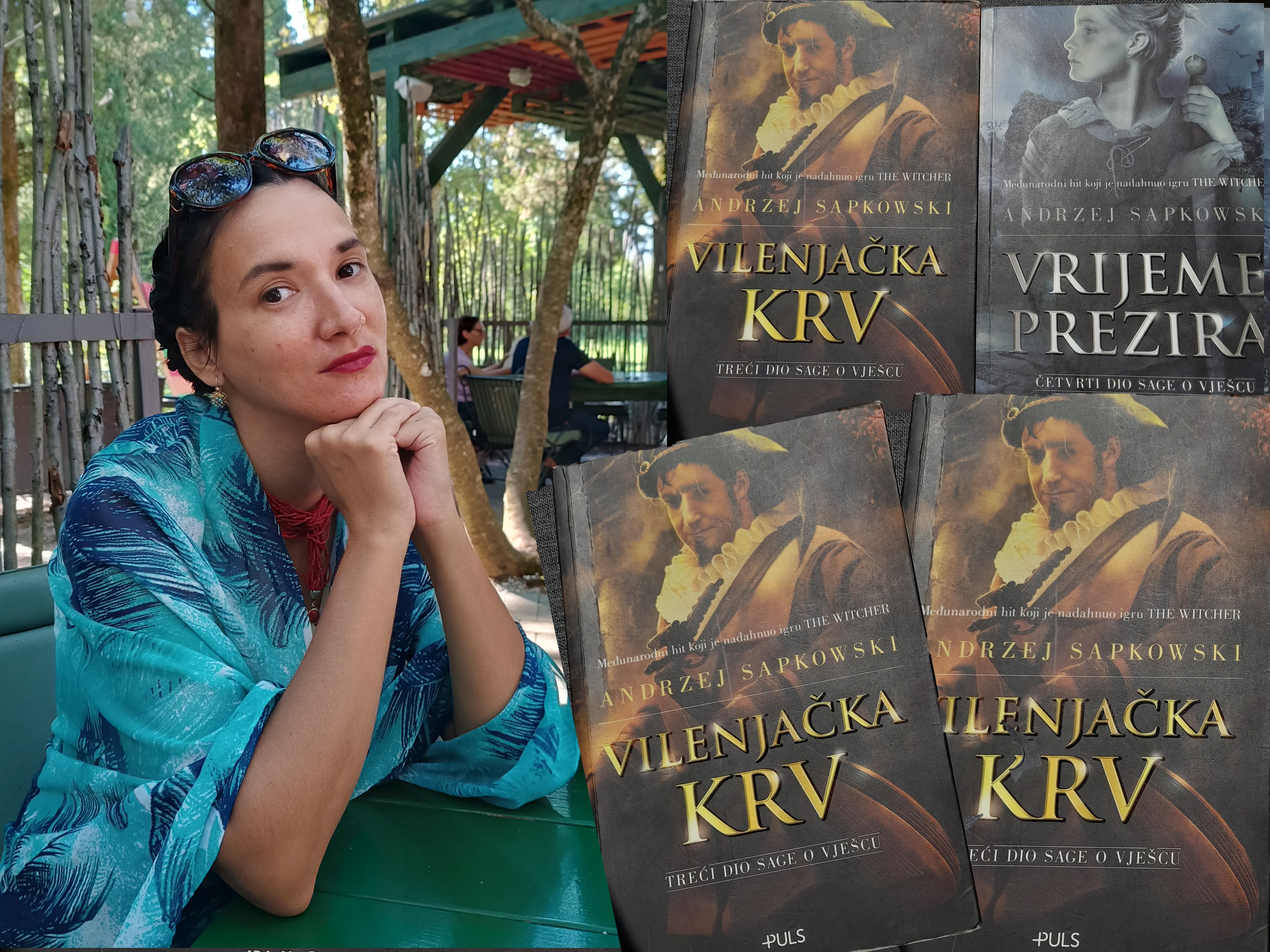
Comments
Post a Comment
You may email me for any questions or business inquires.